


English


Paperback
₹1809
(All inclusive*)
Delivery Options
Please enter pincode to check delivery time.
*COD & Shipping Charges may apply on certain items.
Review final details at checkout.
Looking to place a bulk order? SUBMIT DETAILS
Delivery Options
Please enter pincode to check delivery time.
*COD & Shipping Charges may apply on certain items.
Review final details at checkout.
About The Book
Description
Author
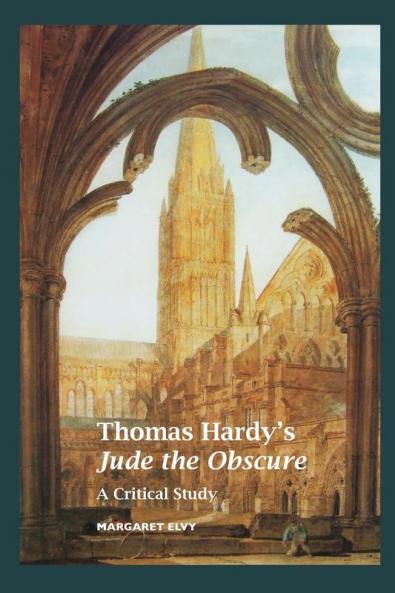
THOMAS HARDY'S JUDE THE OBSCURE<P> <P> A study of the novel Jude the Obscure using contemporary feminist and literary theory. </P> <P> Illustrated with notes and a bibiography. </P> <P> Jude the Obscure (1895) Thomas Hardy's last novel is a sister (or brother) book to Tess of the d'Urbervilles (1891) before he turned to poetry and other forms of writing. The author attacks similar targets: the family politics religion marriage education and sexuality. Hardy was on fire when he wrote Jude the Obscure - it is a very angry work. </P><P> Jude the Obscure though contains far more polemic and philosophizing than Tess or any of the earlier novels. The preaching and polemic threatens to undo the narrative which is nevertheless 'realist' like other Thomas Hardy fictions. <P/><P> In Jude the Obscure Hardy was stretching the novel to the limit testing the boundaries of what is 'acceptable'. In Jude the Obscure the things that say 'you shan't' are variously God religion education circumstance chance nature and marriage. All of the institutions and 'causes' reside inside the individual which is what makes the problems they create so difficult to deal with for Sue and Jude. Patriarchy culture and society are not in some 'out there' space but in people. Hardy's thoughts on Jude the Obscure as expressed in the Life and letters include his desire for a novel about characters 'into whose souls the iron has entered'; a desire to make the story 'grimy' in order to heighten the contrast between the ideal life and the 'squalid real life'; the novel 'makes for morality' Hardy said; and ended up 'a mass of imperfections' a remark many artists have made of their work. </P>

Piracy-free

Assured Quality

Secure Transactions

Fast Delivery

Sustainably Printed
Details
ISBN 13
9781861712868
Publication Date
-01-10-2010
Pages
-188
Weight
-276 grams
Dimensions
-156x234x10.15 mm
