


English


Paperback
₹11827
₹13570
12.84% OFF
(All inclusive*)
Delivery Options
Please enter pincode to check delivery time.
*COD & Shipping Charges may apply on certain items.
Review final details at checkout.
Looking to place a bulk order? SUBMIT DETAILS

Piracy-free

Assured Quality

Secure Transactions
About The Book
Description
Author
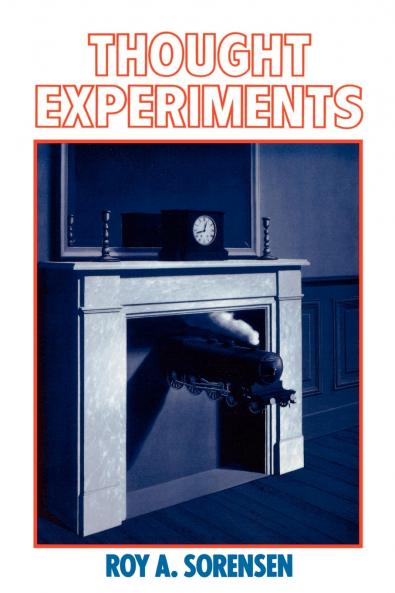
Can merely thinking about an imaginary situation provide evidence for how the world actually is--or how it ought to be? In this lively book Roy A. Sorensen addresses this question with an analysis of a wide variety of thought experiments ranging from aesthetics to zoology. Presenting the first general theory of thought experiment he sets it within an evolutionary framework and integrates recent advances in experimental psychology and the history of science with special emphasis on Ernst Mach and Thomas Kuhn.Sorensen explores what thought experiments are how they work and what their virtues and vices are. In his view philosophy differs from science in degree but not in kind. For this reason he claims it is possible to understand philosophical thought experiments by concentrating on their resemblance to scientific relatives. Sorensen assesses the hazards of thought experiments and grants that there are interesting ways in which the method leads us astray but attacks most scepticism about thought experiments as arbitrary. He maintains that they should be used--as they generally are--as part of a diversified portfolio of techniques creating a network of cross-checks that make for impressive reliability.
Piracy-free
Assured Quality
Secure Transactions
Delivery Options
Please enter pincode to check delivery time.
*COD & Shipping Charges may apply on certain items.
Review final details at checkout.
Details
ISBN 13
9780195129137
Publication Date
-01-12-1998
Pages
-332
Weight
-451 grams
Dimensions
-152x229x18.85 mm
