


This Book is Out of Stock!
English



₹15625
₹20342
23.19% OFF
(All inclusive*)
Hardback
Delivery Options
*COD & Shipping Charges may apply on certain items.
Review final details at checkout.
Looking to place a bulk order? SUBMIT DETAILS
*COD & Shipping Charges may apply on certain items.
Review final details at checkout.
₹15625
₹20342
23% OFF
Hardback
Out Of Stock
All inclusive*
About The Book
Description
Author
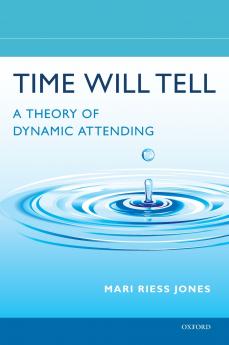
Attention is a central concept in psychology. The term 'attention' itself has persisted even though it implies a static insulated capacity that we use when it is necessary to focus upon some relevant or stimulating event. Riess Jones presents a different way of thinking about attention; one that describes it as a continuous activity that is based on energy fluctuating in time. A majority of attention research fails to examine influence of event time structure (i.e. a speech utterance) on listeners' moment-to-moment attending. General research ignores listeners endowed with innate as well as acquired temporal biases. Here attending is portrayed as a dynamic interaction of an individual within his or her surroundings. <p/>Importantly this interaction involves synchronicity between an attender and external events. This emphasis on time and synchronicity distinguishes the author's theory called Dynamic Attending Theory (DAT) from other approaches to attending which characterize attention metaphorically as a filter resource pool spotlight and so on. Recent research from neuroscience has lent support to Riess Jones' theory and the goal of this book is to bring this new research as well as her own to the wide audience of psychologists interested in attention more broadly.<br>

Piracy-free

Assured Quality

Secure Transactions

Fast Delivery

Sustainably Printed
Details
ISBN 13
9780190618216
Publication Date
-17-12-2018
Pages
-372
Weight
-768 grams
Dimensions
-178x254x22.23 mm
