


English



Paperback
₹1687
₹1848
8.71% OFF
(All inclusive*)
Delivery Options
Please enter pincode to check delivery time.
*COD & Shipping Charges may apply on certain items.
Review final details at checkout.
Looking to place a bulk order? SUBMIT DETAILS
Delivery Options
Please enter pincode to check delivery time.
*COD & Shipping Charges may apply on certain items.
Review final details at checkout.
About The Book
Description
Author
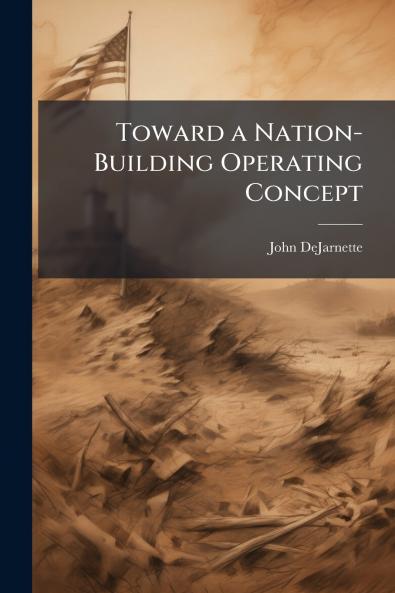
<p>This monograph explores political science theory and contemporary practice to develop a structural framework for nation-building. The generalized framework is predicated on the observation that interagency operations can achieve a degree of self-synchronization by implementing a high-level operating concept. Self-synchronization achieves unity of action and obviates the need for cumbersome interagency coordinating bodies in all but the highest risk activities. In the context of nation-building an operating concept is defined as a mid-to long-term directive that outlines objectives principles and guidelines for achieving synergy among the operations of U.S. agencies that do not share a common corporate leadership structure or chain of command. There are seven thematic attributes of a nation-building operating concept: persistent effort over time the requirement for normative decisions during intervention bottom-up development of representative and accountable institutions transparency incremental adaptation and limited scope of indigenous government powers. These are derived from political science and economic theory as well as observations of contemporary nation-building operations. These nation-building themes can help to resolve the disequilibrium in institutional power that characterizes most nation-building operations. The principles of an enterprise approach can be successful in nation-building. However the practitioner is cautioned against one-size-fits-all approaches. Iteration and adjustment are critical throughout the protracted nation-building process. This monograph provides a number of tools to support development of a context-specific operating concept for nation-building: a taxonomy of state strength for assessing structural weaknesses a set of conflict regulating behaviors that facilitate settlements a framework for DDR activities recommendations for balancing compulsory power of the state with the power of voluntary citizen associati</p><p>This work has been selected by scholars as being culturally important and is part of the knowledge base of civilization as we know it. This work was reproduced from the original artifact and remains as true to the original work as possible. Therefore you will see the original copyright references library stamps (as most of these works have been housed in our most important libraries around the world) and other notations in the work.</p><p>This work is in the public domain in the United States of America and possibly other nations. Within the United States you may freely copy and distribute this work as no entity (individual or corporate) has a copyright on the body of the work.</p><p>As a reproduction of a historical artifact this work may contain missing or blurred pages poor pictures errant marks etc. Scholars believe and we concur that this work is important enough to be preserved reproduced and made generally available to the public. We appreciate your support of the preservation process and thank you for being an important part of keeping this knowledge alive and relevant.</p>

Piracy-free

Assured Quality

Secure Transactions

Fast Delivery

Sustainably Printed
Details
ISBN 13
9781288325313
Publication Date
-21-11-2012
Pages
-56
Weight
-95 grams
Dimensions
-156x234x3.05 mm
