






by
John Lok
English










Paperback
₹998
₹1666
40.1% OFF
(All inclusive*)
Delivery Options
Please enter pincode to check delivery time.
*COD & Shipping Charges may apply on certain items.
Review final details at checkout.
Looking to place a bulk order? SUBMIT DETAILS
Delivery Options
Please enter pincode to check delivery time.
*COD & Shipping Charges may apply on certain items.
Review final details at checkout.
About The Book
Description
Author
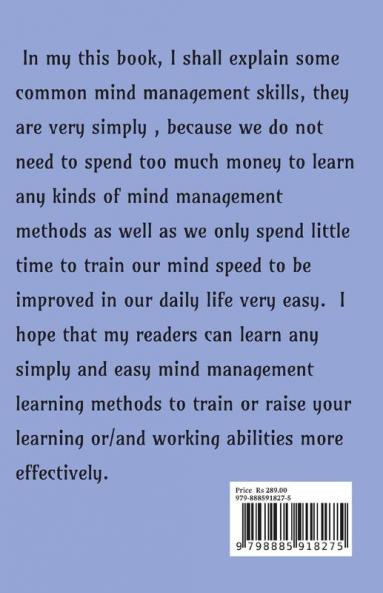
<p>The Influence of Behavioral Economics on Talent Management:</p><p>Perspectives in the Modern EraThe integration of behavioral economics into talent management represents a paradigm shift from traditional rational-actor models of human resources toward a framework that acknowledges the cognitive biases and psychological nuances of the workforce.</p><p>I am a prominent scholar in organizational behavior and management emphasizes that talent management is not merely a logistical exercise in human capital allocation but a complex psychological endeavor. My perspective often aligned with the broader movement of nudging within organizations suggests that talent management strategies must account for the fact that employees do not always act in their own long-term best interests due to bounded rationality.</p><p>By applying principles from behavioral economics-such as loss aversion the endowment effect and hyperbolic discounting-my view and contemporary management theorists argue that organizations can design better incentive structures performance appraisal systems and career development pathways. For instance if an organization understands that employees value the avoidance of loss more than the acquisition of equivalent gains talent managers can restructure compensation packages to emphasize the protection of benefits rather than just potential bonuses.</p>

Piracy-free

Assured Quality

Secure Transactions

Fast Delivery

Sustainably Printed
Details
ISBN 13
9798885918275
Publication Date
-09-02-2022
Pages
-402
Weight
-470 grams
Dimensions
-139.7x215.9x22.16 mm
