

English



Hardback
₹11639
₹12332
5.62% OFF
(All inclusive*)
Delivery Options
Please enter pincode to check delivery time.
*COD & Shipping Charges may apply on certain items.
Review final details at checkout.
Looking to place a bulk order? SUBMIT DETAILS
Delivery Options
Please enter pincode to check delivery time.
*COD & Shipping Charges may apply on certain items.
Review final details at checkout.
About The Book
Description
Author
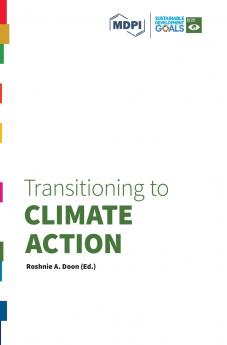
<p>Given all insight from climate science it has become obvious that the only viable path forward is transitioning to an economy that lives off our planet's regeneration rather than its liquidation. We now need to start becoming regenerative. Current trends however such as still increasing fossil fuel emissions indicate that humanity is on the slowest and ultimately most destructive and costliest path. Barriers to change may include financial interests inadequate decision-making or warped incentives. But there are also cognitive obstacles such as a failure of climate communication to mobilize sufficient enthusiasm to solve the problem. Most communication overemphasizes personal sacrifice failing to ignite individuals' and institutions' desire for change. Much communication furthermore has a moralistic undertone or is at least perceived as finger-pointing hardening the emotional resistance. This messaging is counterproductive: Climate action is not noble but necessary. Without rapid shifts in perception and public desire for decision-making that embraces our one-planet context runaway climate change and biodiversity loss is inevitable.</p><p></p><p>Drawing on a canon of voices from academia international institutions governments businesses foundations working on climate change and civil society&nbsp;<em>Transitioning to Climate Action</em>&nbsp;follows the conviction that we need to stop waiting for others to act first. Thus given the clarity of the challenge this volume aims to discuss the possibilities which indeed exist to succeed with the transformation set out by the Paris Agreement and its climate goals.</p><p>&nbsp;</p><p><em>Transitioning to Climate Action&nbsp;</em>is part of MDPI's new Open Access book series&nbsp;<em>Transitioning to Sustainability.&nbsp;</em>With this series MDPI pursues environmentally and socially relevant research which contributes to efforts toward a sustainable world.&nbsp;<em>Transitioning to Sustainability</em>&nbsp;aims to add to the conversation about regional and global sustainable development according to the 17 SDGs. Set to be published in spring 2020 and coinciding with the SDGs' 5-year anniversary the book series is intended to reach beyond disciplinary even academic boundaries.&nbsp;</p>

Piracy-free

Assured Quality

Secure Transactions
Details
ISBN 13
9783038978749
Publication Date
-28-08-2025
Pages
-412
Weight
-767 grams
Dimensions
-170x244x30.16 mm
