


English



₹1695
(All inclusive*)
Paperback
Delivery Options
Please enter pincode to check delivery time.
*COD & Shipping Charges may apply on certain items.
Review final details at checkout.
Looking to place a bulk order? SUBMIT DETAILS
Delivery Options
Please enter pincode to check delivery time.
*COD & Shipping Charges may apply on certain items.
Review final details at checkout.
About The Book
Description
Author(s)
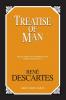
Besides his more famous works of philosophy - Discourse on Method Meditations on First Philosophy and Principles of Philosophy - Descartes devoted a great deal of time and thought to the study of physiology and anatomy. An account of his activities in 1629 reports that he visited butcher shops on an almost daily basis to study specific animal organs and he practiced dissection and even vivisection to explore the workings of major organ systems. In the 1630s he assisted in the dissection of human cadavers - all to satisfy his intense curiosity about how bodies animal and human work. The fruits of this research can be found in his Treatise of Man a work that he decided not to publish for fear of suffering the same fate as Galileo. Consequently this fascinating treatise did not appear until twelve years after his death.Among its many intriguing features are his detailed descriptions of the nervous system and its interactions with the muscles to create movement in response to stimulus. Though we now know that many of these details are wrong Descartes' understanding that much of the body functions as a machine was a stroke of genius. He is the first to describe the reflex arc anticipating Pavlov and the behaviorists by almost 300 years. The idea of the body as a kind of animal machine that functions according to physical laws was an immense advance over the previous scholastic notions based on Aristotle which merely begged the question of how the various organs of the body work by stating that it is in their nature to perform their specific functions.This is a landmark work that students of history medicine biology and the history of science will find richly rewarding.

Piracy-free

Assured Quality

Secure Transactions

Fast Delivery

Sustainably Printed
Details
ISBN 13
9781591020905
Publication Date
-01-07-2003
Pages
-178
Weight
-250 grams
Dimensions
-152x229x37.29 mm
