

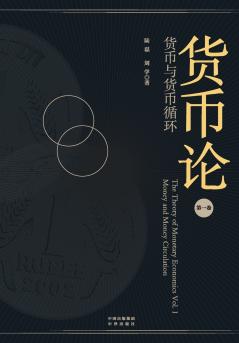
by
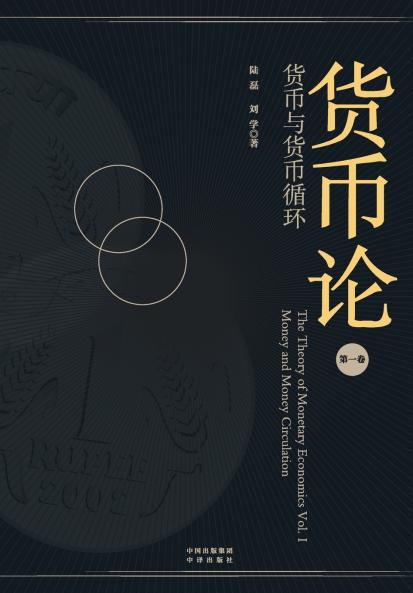
刘学 陆磊
Chinese


Paperback
₹3865
(All inclusive*)
Delivery Options
Please enter pincode to check delivery time.
*COD & Shipping Charges may apply on certain items.
Review final details at checkout.
Looking to place a bulk order? SUBMIT DETAILS
Delivery Options
Please enter pincode to check delivery time.
*COD & Shipping Charges may apply on certain items.
Review final details at checkout.
About The Book
Description
Author
<p>Diagnostic Framework of Financial Intermediaries as Pivotal Nodes in Credit Circuits</p><p>分析金融中介在货币循环中的主导地位</p><p></p><p>Based on the operation of monetary economy in reality this book proposes that the essence of currency is a right that is holding currency means obtaining the right to claim future utility; Currency trading is a pure currency transaction in which the public and central banks act as the money supply side and financial intermediaries act as the money demand side. Based on the redefinition of currency and currency transactions this book constructs a micro foundation for the theory of currency demand in banks (financial intermediaries) and analyzes the superposition of currency neutrality and non neutrality; Two theorems on excess money demand have been derived proving that the independence of bank credit and the formation of collateral financing mechanisms will drive banks' excess money demand for the household sector resulting in cyclical economic financial phenomena of overinvestment and credit contraction; Later the paper makes a deep analysis of the two currency cycles in the real monetary economy - output currency cycle and asset currency cycle and demonstrates how the mortgage financing mechanism drives asset foam and asset price inflation as well as the role of loose monetary policy in this process.</p><p>基于现实的货币经济运行,本书提出:货币的本质是一种权利,即持有货币意味着获得未来效用索取权;货币交易是公众和中央银行作为货币供给方、金融中介机构作为货币需求方的纯粹货币交易。基于对货币与货币交易的重新界定,本书构建了银行(金融中介)货币需求理论的微观基础,分析了货币中性与非中性的叠加态;推导出了超额货币需求两大定理,证明了银行信用的独立和抵质押融资机制的形成都会驱动银行对家庭部门的超额货币需求,由此形成过度投资和信贷收缩周期性经济-金融现象;后对现实货币经济中存在的两种货币循环--产出-货币循环和资产-货币循环--进行深度剖析,论证了抵质押融资机制如何驱动资产泡沫化和资产价格膨胀,以及宽松的货币政策在这一过程中的助推作用。</p>

Piracy-free

Assured Quality

Secure Transactions

Fast Delivery

Sustainably Printed
Details
ISBN 13
9787500167532
Publication Date
-01-10-2021
Pages
-400
Weight
-644 grams
Dimensions
-170x244x27.61 mm
