


English


₹6904
₹9039
23.62% OFF
(All inclusive*)
Hardback
Delivery Options
Please enter pincode to check delivery time.
*COD & Shipping Charges may apply on certain items.
Review final details at checkout.
Looking to place a bulk order? SUBMIT DETAILS
Delivery Options
Please enter pincode to check delivery time.
*COD & Shipping Charges may apply on certain items.
Review final details at checkout.
About The Book
Description
Author
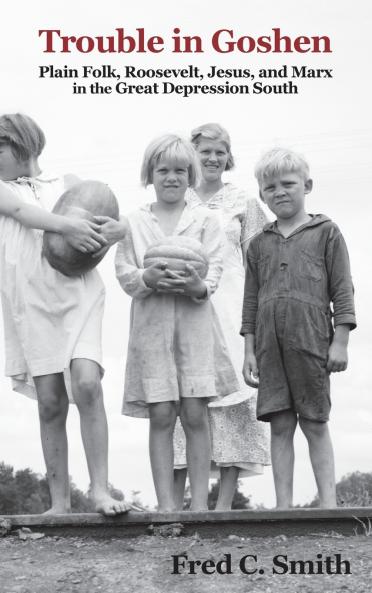
The Great Depression emboldened Americans to tolerate radical experimentation in search of solutions to economic problems. Amongst the thorniest of those problems was that of Southern poverty; indeed FDR claimed in 1933 that Southern rural poverty was the nation's number one economic problem. In Trouble in Goshen Fred C. Smith focuses on three communities designed and implemented to solve that problem. This book examines the economic and social theories - and their histories - that resulted in the creation and operation of the most aggressive and radical experimentation in the United States. Trouble in Goshen tells the story of three communitarian experiments the administrative details thereof and the struggles actions and reactions of the clients of The Tupelo Homesteads Dyess Colony and Delta Cooperative Farm. The Tupelo (Mississippi) Homesteads were created under the aegis of the tiny Division of Subsistence Homesteads a short-lived first New Deal agency. Dyess (Arkansas) Colony was the largest of the Resettlement Administration's efforts to conjure failed farmers into Jeffersonian yeoman farmers. The third community The Delta (Mississippi) Cooperative Farm a product of the active cooperation between the Socialist Party of America and a cadre of liberal churchmen led by Reinhold Niebuhr attempted to weave the piety passion propaganda and theory of Jesus and Marx into strong economic and social cables that would lift the failed sharecroppers of the bi-racial cooperative into owners of the means of production.The accoutrements facilities and management styles of the projects reveal a clearly delineated class-order among the poor. Indeed Trouble in Goshen demonstrates the class-conscious angst that enveloped three distinct levels of poverty and the struggles of plain folk to preserve their tenuous status and to avoid overt peasantry.

Piracy-free

Assured Quality

Secure Transactions

Fast Delivery

Sustainably Printed
Details
ISBN 13
9781617039560
Publication Date
-31-01-2014
Pages
-228
Weight
-403 grams
Dimensions
-152x229x17.46 mm
