

English



Paperback
₹10966
(All inclusive*)
Delivery Options
Please enter pincode to check delivery time.
*COD & Shipping Charges may apply on certain items.
Review final details at checkout.
Looking to place a bulk order? SUBMIT DETAILS
Delivery Options
Please enter pincode to check delivery time.
*COD & Shipping Charges may apply on certain items.
Review final details at checkout.
About The Book
Description
Author
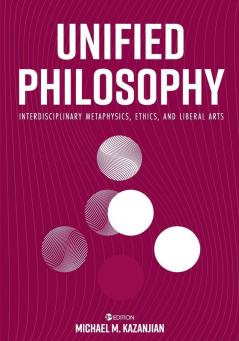
<p><em style=color: rgba(51 51 51 1)>Unified Philosophy: Interdisciplinary Metaphysics Ethics and Liberal Arts</em><span style=color: rgba(51 51 51 1)>&nbsp;demonstrates how an integrated vision of metaphysics ethics and hermeneutics can serve as an underlying philosophy for general education or liberal arts courses and programs. Its unique approach elevates such courses to orientation and reorientation courses and seminars within higher education.</span></p><p><span style=color: rgba(51 51 51 1)>The book introduces and reintroduces concepts in philosophy in ethics for students and faculty. It underscores that philosophy is theoretical and applied metaphysics; metaphysics is applied ethics and hermeneutics; and ethics and hermeneutics are applied metaphysics.</span></p><p><span style=color: rgba(51 51 51 1)>The opening chapter explores metaphysics: inquiry into reality. It consists of two sections: part and whole; and change and stability. Part and whole involve four positions about reality: part-alone holistic or limited part part-whole dualism or whole-alone. Change and stability also entail four positions about reality: change-alone holistic or directed change change-stability dualism or stability-alone. In turn each of the eight positions integrates the apparently unrelated languages of game theory mereology functions sets virtue ethics phenomenology cybernetics and ergonomics/human factors. Chapter One forms the model of which the remaining chapters are applications.</span></p><p><span style=color: rgba(51 51 51 1)>The third edition expands Alphonse Chapanis' environment-user interface to four interfaces: environment-environment environment-person person-environment and person-person interfaces. New chapters include Chapter One Chapter Two and Chapter Seven. Chapter Two examines positivism through subjectivity spectrum. Chapter Seven examines management reality including authority.</span></p><p><span style=color: rgba(51 51 51 1)>Written in recognition of ethics and metaphysics as fundamental components of philosophy and the quest for wisdom&nbsp;</span><em style=color: rgba(51 51 51 1)>Unified Philosophy</em><span style=color: rgba(51 51 51 1)>&nbsp;is a thought-provoking text for students of theology ethics law medicine and engineering education and city planning/environmental science.</span></p>

Piracy-free

Assured Quality

Secure Transactions
Details
ISBN 13
9781516597918
Publication Date
-28-12-2020
Pages
-248
Weight
-444 grams
Dimensions
-178x254x13.25 mm
