

English


₹4358
₹5326
18.17% OFF
(All inclusive*)
Paperback
Delivery Options
Please enter pincode to check delivery time.
*COD & Shipping Charges may apply on certain items.
Review final details at checkout.
Looking to place a bulk order? SUBMIT DETAILS
Delivery Options
Please enter pincode to check delivery time.
*COD & Shipping Charges may apply on certain items.
Review final details at checkout.
About The Book
Description
Author
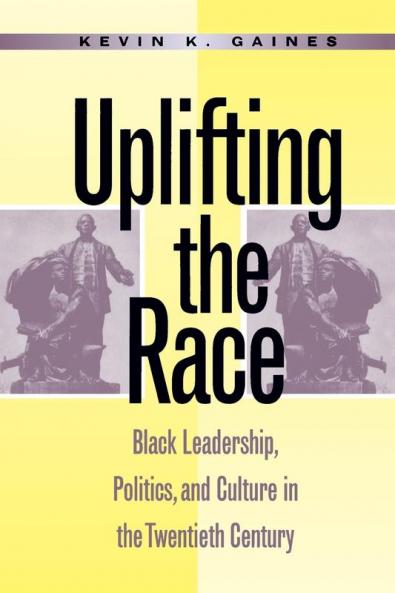
Amidst the violent racism prevalent at the turn of the twentieth century African American cultural elites struggling to articulate a positive black identity developed a middle-class ideology of racial uplift. Insisting that they were truly representative of the race&#x2019;s potential black elites espoused an ethos of self-help and service to the black masses and distinguished themselves from the black majority as agents of civilization; hence the phrase 'uplifting the race.'<br/><br/>A central assumption of racial uplift ideology was that African Americans' material and moral progress would diminish white racism. But Kevin Gaines argues that in its emphasis on class distinctions and patriarchal authority racial uplift ideology was tied to pejorative notions of racial pathology and thus was limited as a force against white prejudice.<br/><br/>Drawing on the work of W. E. B. Du Bois Anna Julia Cooper Alice Dunbar-Nelson Hubert H. Harrison and others Gaines focuses on the intersections between race and gender in both racial uplift ideology and black nationalist thought showing that the meaning of uplift was intensely contested even among those who shared its aims. Ultimately elite conceptions of the ideology retreated from more democratic visions of uplift as social advancement leaving a legacy that narrows our conceptions of rights citizenship and social justice.

Piracy-free

Assured Quality

Secure Transactions

Fast Delivery

Sustainably Printed
Details
ISBN 13
9780807845431
Publication Date
-19-02-1996
Pages
-344
Weight
-490 grams
Dimensions
-156x234x19.51 mm
