

English


₹3322
₹3497
5% OFF
(All inclusive*)
Paperback
Delivery Options
Please enter pincode to check delivery time.
*COD & Shipping Charges may apply on certain items.
Review final details at checkout.
Looking to place a bulk order? SUBMIT DETAILS
Delivery Options
Please enter pincode to check delivery time.
*COD & Shipping Charges may apply on certain items.
Review final details at checkout.
About The Book
Description
Author
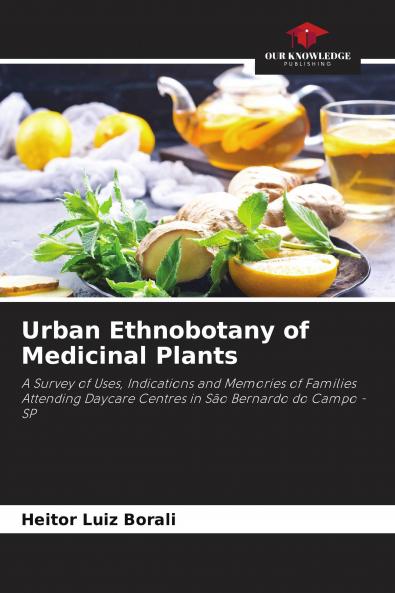
In developing countries the high cost of synthetic medicines limits the acquisition of drugs to a privileged section of the population. The aim of this study was to carry out a survey of medicinal plants used by families who use the day-care centre system in the municipality of São Bernardo do Campo - SP. Methodologies such as closed questionnaires and participant observation were used to collect the data. The 220 interviewees ranged in age from 15 to 62 and said they used medicinal plants as a family tradition. 86 species belonging to 43 botanical families were found. The community mentioned using the plants mainly to treat respiratory (33 species) and digestive (31 species) diseases. Leaves bark and branches are the most commonly used plant parts in the form of decoctions and syrups. The data indicates a high diversity of medicinal plants used by this community. Modernisation brings with it new health care options and a certain devaluation of local culture which will in the medium term lead to a decrease in the availability and use of native and spontaneous plants for medicinal purposes.

Piracy-free

Assured Quality

Secure Transactions

Fast Delivery

Sustainably Printed
Details
ISBN 13
9786206424161
Publication Date
-05-09-2023
Pages
-56
Weight
-90 grams
Dimensions
-150x220x3.48 mm
