

English



Paperback
₹3092
(All inclusive*)
Delivery Options
Please enter pincode to check delivery time.
*COD & Shipping Charges may apply on certain items.
Review final details at checkout.
Looking to place a bulk order? SUBMIT DETAILS
Delivery Options
Please enter pincode to check delivery time.
*COD & Shipping Charges may apply on certain items.
Review final details at checkout.
About The Book
Description
Author
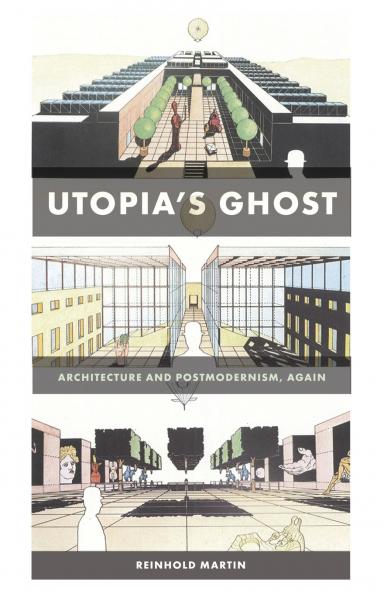
<div>Architectural postmodernism had a significant impact on the broader development of postmodern thought: <i>Utopia's Ghost</i> is a critical reconsideration of their relationship. Combining discourse analysis historical reconstruction and close readings of buildings projects and texts from the 1970s and 1980s Reinhold Martin argues that retheorizing postmodern architecture gives us new insights into cultural postmodernism and its aftermath.</div> <div>&nbsp;</div> <div>Much of today's discussion has turned to the recovery of modernity but Martin writes in the Introduction Simply to historicize postmodernism seems inadequate and in many ways premature. <i>Utopia's Ghost</i> connects architecture to current debates on biopolitics neoliberalism and corporate globalization as they are haunted by the problem of utopia. Exploring a series of concepts-territory history language image materiality subjectivity and architecture itself-Martin shows how they reorganize the cultural imaginary and shape a contemporary biopolitics that ultimately precludes utopian thought.</div> <div>&nbsp;</div> <div>Written at the intersection of culture politics and the city particularly in the context of corporate globalization <i>Utopia's Ghost</i> challenges dominant theoretical paradigms and opens new avenues for architectural scholarship and cultural analysis.</div>

Piracy-free

Assured Quality

Secure Transactions

Fast Delivery

Sustainably Printed
Details
ISBN 13
9780816669639
Publication Date
-15-04-2010
Pages
-272
Weight
-324 grams
Dimensions
-140x216x15.6 mm
