


English


Hardback
₹2196
(All inclusive*)
Delivery Options
Please enter pincode to check delivery time.
*COD & Shipping Charges may apply on certain items.
Review final details at checkout.
Looking to place a bulk order? SUBMIT DETAILS

Piracy-free

Assured Quality

Secure Transactions
About The Book
Description
Author
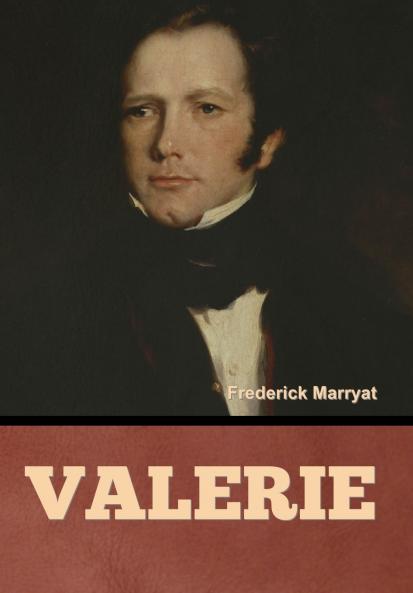
<p>PREFACE</p><p>On August 10 1845 Marryat wrote to Mrs S. a lady for whom to the time of his death he retained the highest sentiments of friendship and esteem:-</p><p>I really wish you would write your confessions I will publish them. I have a beautiful opening in some memoranda I have made of the early life of a Frenchwoman that is up to the age of seventeen when she is cast adrift upon the world and I would work it all up together. Let us commence and divide the tin; it is better than doing nothing. I have been helping Ainsworth in the New Monthly and I told him that I had commenced a work called Mademoiselle Virginie which he might perhaps have. Without my knowing it he has announced its coming forth; but it does not follow that he is to have it nevertheless and indeed he now wishes me to continue one (The Privateersman) that I have already begun in the magazine.</p><p>However Mrs S. with whom at one time Washington Irving also wished to collaborate declined the offer; and Mademoiselle Virginie was ultimately published in the New Monthly under the title of Valerie. The first eleven chapters appeared in the magazine 1846 1847 and the remaining pages were added-according to The Life and Letters of Captain Marryat-by another hand when it came out in book form.</p><p>There are two special features in Valerie beyond its actual merits that inevitably excite our attention. It is Marryat's last work and the only one in which the interest centres entirely on women. For this reason and from the eighteenth century flavour in some of its characters the book inevitably recalls Miss Burney and her little-read The Wanderer in which as in Valerie a proud and sensitive girl is thrown on the world and discovers-by bitter experience as governess companion and music mistress-the sneer that lurks beneath the smile of fashion and prosperity.</p><p>The subject is well handled on the old familiar lines and supplies the groundwork of an eminently readable story peopled by many life-like humours and an attractive spirited heroine. The adventures of Valerie are various and well-sustained; her bearing throughout secures the reader's sympathy and he is conscious of a genuine pleasure in her ultimate prosperity and happiness.</p><p>Valerie an autobiography is here reprinted from the first edition in two volumes. Henry Colburn 1849.</p><p>R.B.J.</p><p>About the Author</p><p></p><p>Captain Frederick Marryat CB FRS (10 July 1792 - 9 August 1848) was a Royal Navy officer and novelist. He is noted today as an early pioneer of nautical fiction particularly for his semi-autobiographical novel Mr Midshipman Easy (1836). He is remembered also for his children's novel The Children of the New Forest (1847). In addition he developed a widely used system of maritime flag signalling known as Marryat's Code. </p><p></p><p>From 1832 to 1835 Marryat edited The Metropolitan Magazine. Additionally he kept writing novels; his biggest success came with Mr Midshipman Easy in 1836. He lived in Brussels for a year travelled in Canada and the United States and moved to London in 1839 where he was in the literary circle of Charles Dickens and others. He was in North America in 1837 when rebellion broke out in Lower Canada and served with the expeditionary force sent to suppress it.</p><p></p><p>Marryat's novels are typical of their time with concerns of family connections and social status often overshadowing the naval action. He based much of his fiction on his 25 years' experience at sea. Among those who admired his works were Mark Twain Joseph Conrad and Ernest Hemingway. As the first nautical novels they served as models for 20th century works by C. S. Forester and Patrick O'Brian. These also were set in the time of Nelson and told of young men rising through the ranks due to their successes as naval officers. ...(wikipedia.org)</p>
Piracy-free
Assured Quality
Secure Transactions
Delivery Options
Please enter pincode to check delivery time.
*COD & Shipping Charges may apply on certain items.
Review final details at checkout.
Details
ISBN 13
9798897731220
Publication Date
-21-03-2025
Pages
-218
Weight
-390 grams
Dimensions
-152x229x17.46 mm
