

English


Paperback
₹5353
(All inclusive*)
Delivery Options
Please enter pincode to check delivery time.
*COD & Shipping Charges may apply on certain items.
Review final details at checkout.
Looking to place a bulk order? SUBMIT DETAILS
Delivery Options
Please enter pincode to check delivery time.
*COD & Shipping Charges may apply on certain items.
Review final details at checkout.
About The Book
Description
Author
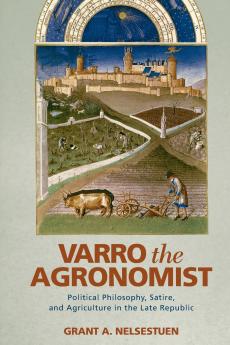
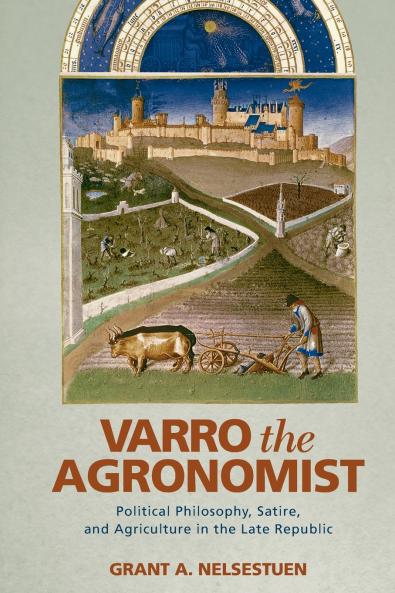
<div>Some six years after his narrow escape from proscription in 43 bce Marcus Terentius Varro the most learned of the Romans wrote a technical treatise on farming in the form of a satirico-philosophical dialogue. Grant A. Nelsestuen argues that far from simply being just another encyclopedic entry of a seemingly aloof antiquarian or offering an escapist's retreat into rustication Varro's <i>De Re Rustica</i> uses the model of the farm to craft an implicitly political treatise that grapples with multifarious challenges facing the contemporary Roman world.<br> &nbsp;<br> On one level Varro's treatise presents an innovative account of the Roman farm which rationalizes new agricultural and pastoral opportunities for contemporary elite owners of large-scale estates. But on another level this bold agronomical vision associates the farm's different spheres with distinct areas under Roman control thereby allegorizing Rome's empire on the model of a farm. Nelsestuen argues that Varro's treatise thus provides his contemporaries with a model for governing the Roman state anticipates Augustus' subsequent transformation of Roman dominion into a coherent territorial state and offers an ancient theory of imperialism.<br> &nbsp;<br> Shedding new light on the only completely extant work of a much-celebrated but ill-understood figure <i>Varro the Agronomist</i> has much to offer to those interested in Latin literature-especially Cicero and Vergil-as well as on the political dimensions of intellectual life in first-century bce Rome ancient imperialism and Roman political philosophy.</div>

Piracy-free

Assured Quality

Secure Transactions
Details
ISBN 13
9780814252215
Publication Date
-18-09-2016
Pages
-332
Weight
-451 grams
Dimensions
-152x229x18.85 mm
