

English



₹1696
₹1871
9.35% OFF
(All inclusive*)
Paperback
Delivery Options
Please enter pincode to check delivery time.
*COD & Shipping Charges may apply on certain items.
Review final details at checkout.
Looking to place a bulk order? SUBMIT DETAILS
Delivery Options
Please enter pincode to check delivery time.
*COD & Shipping Charges may apply on certain items.
Review final details at checkout.
About The Book
Description
Author
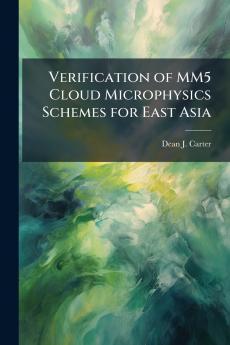
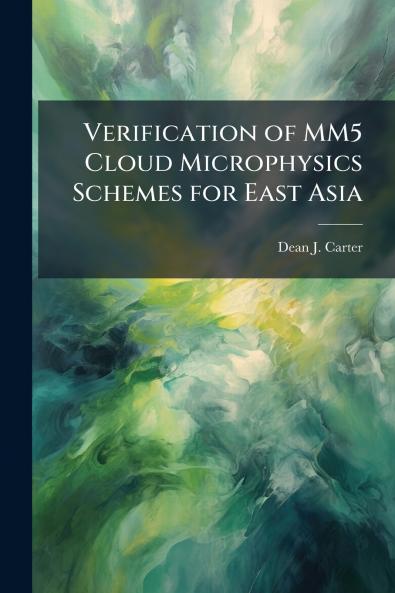
<p>This research compares biases of the Reisner Mixed-Phase Explicit Moisture Microphysics graupel (Option 7) and non-graupel schemes (Option 5) to determine if including graupel and riming processes within the Fifth Generation Mesoscale Model (MM5) will lead to improved forecasts of winter precipitation over Korea and Japan. The main purpose of this research was to make a recommendation to Air Force Weather Agency (AFWA) as to whether a more computationally expensive scheme is better suited for the East Asian theater. The ultimate goal is to find a way to reduce the negative impact winter precipitation places on military operations and public safety. To explore the biases of these two Reisner schemes MM5 forecasts were generated every 12 hours for a 20-day case period within January 1998. Gridded meteorological fields were interpolated to the station coordinates of four verification sites within the East Asian domain and radiosonde observations were used to compare the differences between the average temperature and water vapor errors of the two cloud microphysics schemes. Various scores were used to compare the success of the two Reisner schemes to categorically forecast precipitation type at the surface. Analysis of the results shows significant differences between the schemes in the magnitude of humidity errors within the lower atmosphere of the model and provides evidence that the more complicated Option 7 microphysics will not increase the skill of the MM5 to forecast winter precipitation for Japan and Korea. The underlying conclusion of this research is that AFWA should not alter the cloud microphysics scheme currently employed to determine winter precipitation type for its East Asian forecast window.</p><p>This work has been selected by scholars as being culturally important and is part of the knowledge base of civilization as we know it. This work was reproduced from the original artifact and remains as true to the original work as possible. Therefore you will see the original copyright references library stamps (as most of these works have been housed in our most important libraries around the world) and other notations in the work.</p><p>This work is in the public domain in the United States of America and possibly other nations. Within the United States you may freely copy and distribute this work as no entity (individual or corporate) has a copyright on the body of the work.</p><p>As a reproduction of a historical artifact this work may contain missing or blurred pages poor pictures errant marks etc. Scholars believe and we concur that this work is important enough to be preserved reproduced and made generally available to the public. We appreciate your support of the preservation process and thank you for being an important part of keeping this knowledge alive and relevant.</p>

Piracy-free

Assured Quality

Secure Transactions

Fast Delivery

Sustainably Printed
Details
ISBN 13
9781288291984
Publication Date
-13-11-2012
Pages
-92
Weight
-144 grams
Dimensions
-156x234x4.95 mm
