


English
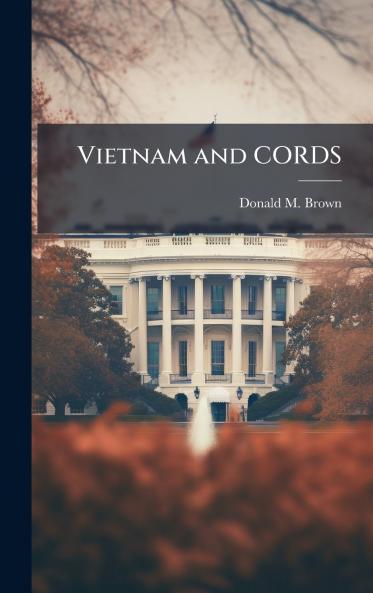



Hardback
₹2636
₹2824
6.66% OFF
(All inclusive*)
Delivery Options
Please enter pincode to check delivery time.
*COD & Shipping Charges may apply on certain items.
Review final details at checkout.
Looking to place a bulk order? SUBMIT DETAILS
Delivery Options
Please enter pincode to check delivery time.
*COD & Shipping Charges may apply on certain items.
Review final details at checkout.
About The Book
Description
Author
<p>Counterinsurgency (COIN) doctrine emphasizes the importance of unity of effort between all agencies involved in a COIN fight. The same doctrine and history stresses that unity of effort is best achieved through consolidating all efforts under a single chain of command or leader. When multiple agencies pursue differing agendas unity of effort suffers. Interagency coordination and synchronization issues at the highest levels of the US Government continue to affect the war in Iraq. The Department of Defense and Department of State have overlapping responsibilities for Iraq. This problem is best studied through the efforts of Provincial Reconstruction Teams (PRTs) and Stability and Reconstruction efforts in Iraq. The President has issued various National Security Directives regarding Stability and Reconstruction in Iraq and which Agencies lead but the issue is far from resolved. The US Government faced a similar problem during the Vietnam War. As Vietnam grew in scope and scale the US Government faced a challenge in coordinating the efforts of all of the Agencies involved in the war. After a number of unsuccessful attempts by several Presidents President Johnson established the Civil Operations and Rural Development Support (CORDS) program. CORDS consolidated all efforts civilian and military conventional and COIN under a single chain of command and a single leader. CORDS is generally regarded as a successful program in spite of the Vietnam War's final outcome. Lessons learned in the development of CORDS can be applied to the current situation in Iraq. By comparing the developments leading to CORDS with the current developments in Iraq similarities can be identified; lessons from CORDS are indeed applicable. The monograph concludes that the lessons from Vietnam are relevant to Iraq. The monograph recommends that the US Government adopt a CORDS-like approach to Iraq and consolidate Stability and Reconstruction efforts under the Department of Defense rather the De</p><p>This work has been selected by scholars as being culturally important and is part of the knowledge base of civilization as we know it. This work was reproduced from the original artifact and remains as true to the original work as possible. Therefore you will see the original copyright references library stamps (as most of these works have been housed in our most important libraries around the world) and other notations in the work.</p><p>This work is in the public domain in the United States of America and possibly other nations. Within the United States you may freely copy and distribute this work as no entity (individual or corporate) has a copyright on the body of the work.</p><p>As a reproduction of a historical artifact this work may contain missing or blurred pages poor pictures errant marks etc. Scholars believe and we concur that this work is important enough to be preserved reproduced and made generally available to the public. We appreciate your support of the preservation process and thank you for being an important part of keeping this knowledge alive and relevant.</p><br>

Piracy-free

Assured Quality

Secure Transactions

Fast Delivery

Sustainably Printed
Details
ISBN 13
9781025124476
Publication Date
-22-05-2025
Pages
-70
Weight
-206 grams
Dimensions
-156x234x6.35 mm
