


English


₹1602
₹1713
6.48% OFF
(All inclusive*)
Paperback
Delivery Options
Please enter pincode to check delivery time.
*COD & Shipping Charges may apply on certain items.
Review final details at checkout.
Looking to place a bulk order? SUBMIT DETAILS
Delivery Options
Please enter pincode to check delivery time.
*COD & Shipping Charges may apply on certain items.
Review final details at checkout.
About The Book
Description
Author(s)
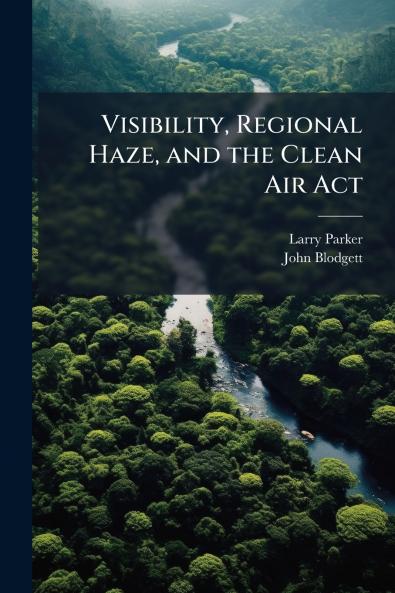
<p>Section 169A of the Clean Air Act (CAA) sets as a national goal the prevention of any future and the remedying of any existing impairment to visibility in designated class I areas (e.g. national parks and wilderness areas). It requires 26 categories of major stationary sources of pollution - including electric generating units (EGUs) - in existence on the date of enactment (1977) but not more than 15 years old as of that date to install best available retrofit technology (BART) if the state determines the source may reasonably be anticipated to cause or contribute to any impairment of visibility in any class I area. A key contributor to regional haze is very fine particles (PM2.5) to which sulfur dioxide (SO2) and nitrogen oxides (NOx) are important contributors. EGUs are major emitters of SO2 and NOx. The Environmental Protection Agency (EPA) was directed to issue regulations to assure that State Implementation Plans (SIPs) required (1) reasonable progress toward meeting the national goal and (2) compliance with specific provisions including the BART requirements. However EPA delayed issuing regional haze rules and in 1990 Congress amended the CAA's visibility requirements. EPA issued the final regional haze rule on July 1 1999. Among its provisions the rule required reasonable progress toward visibility improvement and a state BART implementation plan. For BART states could alternatively propose a trading program - but only if it achieved greater progress in improving visibility. The BART requirement's interaction with other air pollution control programs has become an issue - most notably its relation to the Clean Air Interstate Rule (CAIR) designed to reduce emissions crossing state lines and hindering compliance with National Ambient Air Quality Standards (NAAQS). CAIR involves controls on SO2 and NOx focuses on EGUs as the most cost-effective source to control and proposes using a trading mechanism to accomplish reductions. At issue is how the model CAIR trading program for EGUs interacts with the BART requirement for EGUs. In 2005 EPA made a final determination to exempt EGUs subject to the CAIR trading program from the Section 169A visibility BART program. Critics of EPA's proposal point out that Section 169A specifies protection of individual class I areas and that BART requirements would be more stringent than CAIR for individual sources; and they claim that overall visibility improvements attributable to CAIR would not be adequate to meet CAA goals. EPA's effort to meld the visibility program with CAIR is consistent with its expressed desire to redirect CAA compliance strategies toward a market-oriented cap-and-trade program viewed by many as more cost-effective than direct regulation (such as BART). The Administration has proposed Clear Skies legislation to create a more integrated trading process for addressing SO2 and NOx emissions from EGUs but it failed to be reported out of committee in the Senate. CAIR represents a regulatory initiative to achieve a step in coordinating certain CAA programs but it may be that a statutory solution will be necessary. This report will not be updated.</p><p>This work has been selected by scholars as being culturally important and is part of the knowledge base of civilization as we know it. This work was reproduced from the original artifact and remains as true to the original work as possible. Therefore you will see the original copyright references library stamps (as most of these works have been housed in our most important libraries around the world) and other notations in the work.</p><p>This work is in the public domain in the United States of America and possibly other nations. Within the United States you may freely copy and distribute this work as no entity (individual or corporate) has a copyright on the body of the work.</p><p>As a reproduction of a historical artifact this work may contain missing or blurred pages poor pic

Piracy-free

Assured Quality

Secure Transactions

Fast Delivery

Sustainably Printed
Details
ISBN 13
9781297051302
Publication Date
-16-02-2015
Pages
-20
Weight
-45 grams
Dimensions
-156x234x1.73 mm
