



This Book is Out of Stock!
by
English



Hardback
₹7149
₹8075
11.47% OFF
(All inclusive*)
Delivery Options
*COD & Shipping Charges may apply on certain items.
Review final details at checkout.
Looking to place a bulk order? SUBMIT DETAILS

Piracy-free

Assured Quality

Secure Transactions
About The Book
Description
Author
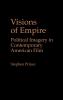
Visions of Empire explores film''s function as a medium of political communication recognizing not just the propaganda film but the various ways that conventional narrative films embody question or critique established social values underlying American attitudes toward historical social and political events. Stephen Prince discusses Hollywood film productions of the 1980s in terms of salient political issues of the period including anxieties about declining U.S. military power the wars in Central America and the prospects for U.S. intervention the legacy of the Vietnam War and urban decay. In analyzing these images and narratives the author also describes and evaluates the cinematic styles available in the Hollywood tradition to filmmakers who address political issues.Chapter 1 establishes the theoretical framework by considering features of the political landscape of the Reagan era. Theories about political representation and the place of ideology in film are also examined. Chapters 2 through 5 focus on the major cycles of political films. Chapter 2 examines the new Cold War films which played upon fears of the Soviet menace (Rambo Invasion USA Red Dawn and Top Gun). Chapter 3 discusses the small group of films--Under Fire Salvador El Norte and others--that addressed the wars in Latin America and the ways they explained the origins of the conflicts and the U.S. role therein. Various histories and mythologies on film of the Vietnam War are examined in Chapter 4 as examples of the symbolic reconstruction of social memory. Chapter 5 looks at politicized science fiction films (Blade Runner Aliens Robocop and Total Recall) offering critical commentaries on the pathologies of contemporary urban society and capitalism.
Piracy-free
Assured Quality
Secure Transactions
*COD & Shipping Charges may apply on certain items.
Review final details at checkout.
₹7149
₹8075
11% OFF
Hardback
Out Of Stock
All inclusive*
Details
ISBN 13
9780275936617
Publication Date
-30-06-1992
Pages
-232
Weight
-428 grams
Dimensions
-156x234x14.29 mm
