

English


Paperback
₹5152
(All inclusive*)
Delivery Options
Please enter pincode to check delivery time.
*COD & Shipping Charges may apply on certain items.
Review final details at checkout.
Looking to place a bulk order? SUBMIT DETAILS

Piracy-free

Assured Quality

Secure Transactions
About The Book
Description
Author
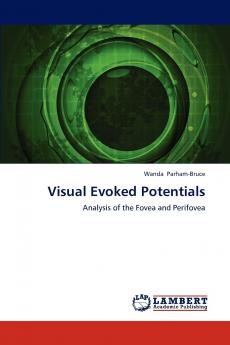
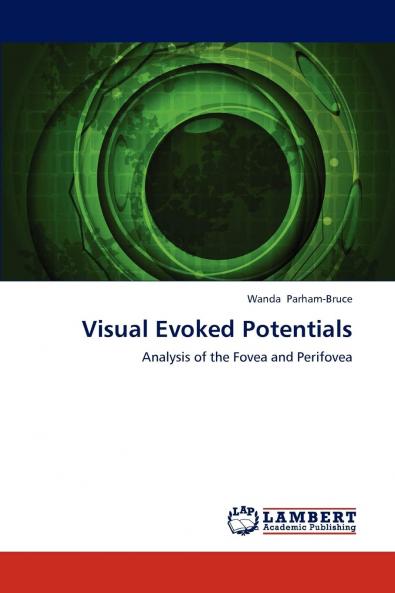
Visual evoked potentials (VEP) were used to measure how stimulus properties (pattern VEP check sizes/spatial frequency) and retinal eccentricity (fovea versus perifovea) interact to give rise to the final VEP response. The purposes of this study were to investigate how stimulus check size (spatial frequencies) and retinal eccentricity affect the VEP response re-examine whether the cortical magnification factor is applicable to VEP measures and to determine optimal sized VEP checks for foveal and perifoveal stimuli. Earlier studies have shown that check size as well as stimulus location in the visual field does affect the VEP response. Experiments conducted in earlier studies focused more on amplitude than implicit time and only a few studies investigated if or how the sum of the foveal and perifoveal amplitudes could be used to predict the amplitude of the full field target. Thus one of the reasons for conducting this research is to add new data to this area of study.
Piracy-free
Assured Quality
Secure Transactions
Delivery Options
Please enter pincode to check delivery time.
*COD & Shipping Charges may apply on certain items.
Review final details at checkout.
Details
ISBN 13
9783659182273
Publication Date
-25-07-2012
Pages
-108
Weight
-158 grams
Dimensions
-150x220x6.15 mm
