

English


Hardback
₹5453
₹5662
3.69% OFF
(All inclusive*)
Delivery Options
Please enter pincode to check delivery time.
*COD & Shipping Charges may apply on certain items.
Review final details at checkout.
Looking to place a bulk order? SUBMIT DETAILS

Piracy-free

Assured Quality

Secure Transactions
About The Book
Description
Author
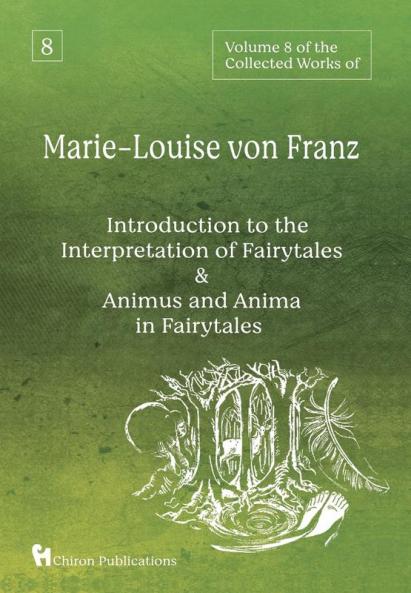
<p><strong>Marie-Louise von Franz believed fairytales to be the purest and simplest expressions of the collective unconscious. Too often the interpreter regresses to a personalized approach however heroes and heroines are abstractions that embody collective archetypes. The innumerable variations within the same fairytale told in different cultures are like a musical theme crisscrossing humanity. In Volume 8 von Franz establishes that there is only one psychic fact to which the fairytale addresses itself namely the SELF.&nbsp;</strong></p><p><br></p><p>Some fairytales emphasize the beginning phases of this experience by dwelling on the shadow others draw attention to the&nbsp;anima&nbsp;and&nbsp;animus&nbsp;while still others hint at the unobtainable treasure.&nbsp;This volume contains new and updated translations of <em>The Interpretation of Fairytales</em> along with <em>Anima and Animus in Fairytales</em> and combines them into a single volume clarifying the Jungian approach to interpreting fairytales and offering a deep dive into anima and animus.</p><p><br></p><p>The anima and the animus deliver to consciousness the life-affirming fruit. Individuation requires engagement with these contra-sexual archetypes but von Franz observes that Anima and animus are not always happy to have this relationship-they lose part of their power when they are made conscious.<strong> </strong>She further warns of the inflation resulting from possession by them and points out that the animus loves to create an atmosphere of mist in which nobody can find orientation.&nbsp;These are supra-personal elements of psychic life capable of breaking beyond the tendency of consciousness to become one-sided.&nbsp;This second section of Volume 8 provides an insightful explanation of a woman's encounter with her animus and a man's encounter with his anima.&nbsp;</p><p><br></p><p>Table of Contents</p><p><strong>Part 1: The Interpretation of Fairytales</strong></p><p>Chapter 1. Some Theories of Fairytales </p><p>Chapter 2. Fairytales Myths and other Archetypal Stories </p><p>Chapter 3. A Method of Psychological Interpretation </p><p>Chapter 4. A Tale Interpreted: The Three Feathers </p><p>Chapter 5. The Three Feathers Continued </p><p>Chapter 6. The Three Feathers Completed </p><p>Chapter 7. A Man's Shadow </p><p>Chapter 8. The Challenge of the Anima </p><p>Chapter 9. The Woman The Shadow and the Animus in Fairytales </p><p><strong>Part 2: Animus and Anima in Fairytales</strong></p><p>Chapter 10. A Fairytale from Northern Germany: Oll Rinkrank </p><p>Chapter 11. A Turkestan Fairytale: The Magic Horse </p><p>Chapter 12. A Norwegian Fairytale: Kari the Girl with the Wooden Frock </p><p>Chapter 13. An African Fairytale: The Magician of the Plain </p><p>Chapter 14. Anima Stories </p><p>Chapter 15. A European Fairytale: The Black Princess </p><p>Chapter 16. A Russian Fairytale: The Virgin Czarina </p><p>Bibliography </p><p>Index </p><p>Index of Fairytales&nbsp;</p>
Piracy-free
Assured Quality
Secure Transactions
Delivery Options
Please enter pincode to check delivery time.
*COD & Shipping Charges may apply on certain items.
Review final details at checkout.
Details
ISBN 13
9781685031701
Publication Date
-15-07-2023
Pages
-354
Weight
-595 grams
Dimensions
-156x234x23.81 mm
