


English


Paperback
₹6444
₹7414
13.08% OFF
(All inclusive*)
Delivery Options
Please enter pincode to check delivery time.
*COD & Shipping Charges may apply on certain items.
Review final details at checkout.
Looking to place a bulk order? SUBMIT DETAILS
Delivery Options
Please enter pincode to check delivery time.
*COD & Shipping Charges may apply on certain items.
Review final details at checkout.
About The Book
Description
Author
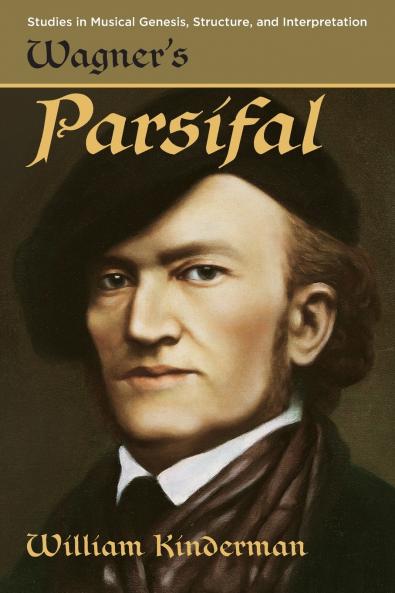
<p>William Kinderman&#39;s detailed study of Parsifal described by the composer as his &quot;last card&quot; explores the evolution of the text and music of this inexhaustible yet highly controversial music drama across Wagner&#39;s entire career. This book offers a reassessment of the ideological and political history of Parsifal shedding new light on the connection of Wagner&#39;s legacy to the rise of National Socialism in Germany. The compositional genesis is traced through many unfamiliar manuscript sources revealing unsuspected models and veiled connections to Wagner&#39;s earlier works. Fresh analytic perspectives are revealed casting the dramatic meaning of Parsifal in a new light. Much debated aspects of the work such as Kundry&#39;s death at the conclusion are discussed in the context of its stage history.<br />Path-breaking as well is Kinderman&#39;s analysis of the religious and ideological context of <em>Parsifal</em>. During the half-century after the composer&#39;s death the Wagner family and the so-called Bayreuth circle sought to exploit Wagner&#39;s work for political purposes thereby promoting racial nationalism and anti-Semitism. Hitherto unnoticed connections between Hitler and Wagner&#39;s legacy at Bayreuth are explored here while differences between the composer&#39;s politics as an 1849 revolutionary and the later response of his family to National Socialism are weighed in a nuanced account. Kinderman combines new historical research sensitive aesthetic criticism and probing philosophical reflection in this most intensive examination of Wagner&#39;s culminating music drama.</p>

Piracy-free

Assured Quality

Secure Transactions

Fast Delivery

Sustainably Printed
Details
ISBN 13
9780190885687
Publication Date
-01-04-2018
Pages
-338
Weight
-481 grams
Dimensions
-156x234x19.18 mm
