

English


Paperback
₹2478
₹2805
11.66% OFF
(All inclusive*)
Delivery Options
Please enter pincode to check delivery time.
*COD & Shipping Charges may apply on certain items.
Review final details at checkout.
Looking to place a bulk order? SUBMIT DETAILS
Delivery Options
Please enter pincode to check delivery time.
*COD & Shipping Charges may apply on certain items.
Review final details at checkout.
About The Book
Description
Author
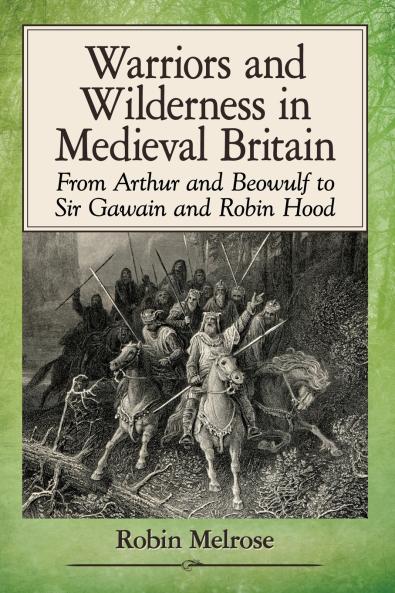
<p> Tracing the development of the King Arthur story in the late Middle Ages this book explores Arthur's depiction as a wilderness figure the descendant of the northern Romano-British hunter/warrior god. The earliest Arthur was a warrior but in the 11th century Welsh tale <I>Culhwch and Olwen</I> he is less a warrior and more a leader of a band of rogue heroes.</p><p> The story of Arthur was popularized by Geoffrey of Monmouth in his Latin <I>History of the Kings of Britain</I> and was translated into Middle English in Layamon's <I>Brut</I> and the later alliterative <I>Alliterative Morte Arthure</I>. Both owed much to the epic poem Beowulf which draws on the Anglo-Saxon fascination with the wilderness. The most famous Arthurian tale is <I>Sir Gawain and the Green Knight</I> in which the wilderness and themes from Beowulf play a leading role. Three Arthurian tales set in Inglewood Forest place Arthur and Gawain in a wilderness setting and link Arthur to medieval Robin Hood tales.</p>

Piracy-free

Assured Quality

Secure Transactions

Fast Delivery

Sustainably Printed
Details
ISBN 13
9781476668260
Publication Date
-22-02-2017
Pages
-260
Weight
-357 grams
Dimensions
-152x229x14.95 mm
