


This Book is Out of Stock!
English


₹1218
(All inclusive*)
Paperback
Delivery Options
*COD & Shipping Charges may apply on certain items.
Review final details at checkout.
Looking to place a bulk order? SUBMIT DETAILS
*COD & Shipping Charges may apply on certain items.
Review final details at checkout.
₹1218
Out Of Stock
All inclusive*
About The Book
Description
Author
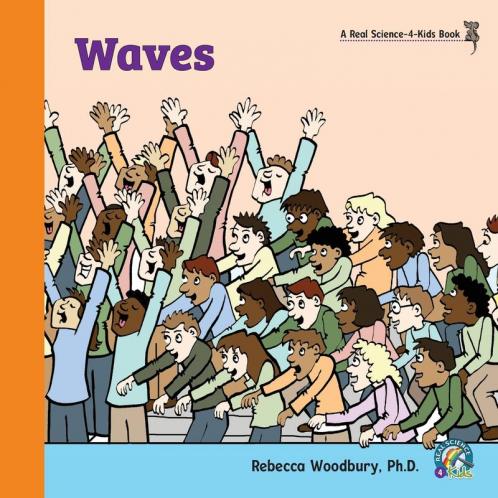
<p>The physics of waves is explained using real science concepts and terminology in a way that is easily understood. Learn that waves transfer the motion of atoms and molecules but don't transfer matter. When you put your foot in water you can see the water ripple. Your foot pushes the water outward making the molecules next to your foot bump into the molecules next to them. This continues as the motion is passed from one molecule to the next forming waves. The molecules are transferring motion not matter and each molecule stays in the same place going back and forth or up and down slightly. </p><p>A transverse wave is one in which the molecules move up and down in place. In a longitudinal wave the molecules move slightly from side to side. You might think of the example of pushing a spring together letting it go and watching the coils move from side to side. </p><p>Waves have a particular shape. A transverse wave has a high point called a peak and a low point called a valley. The height of the peaks results from the amount of energy changes in the wave. In a longitudinal wave the molecules get squished together in some parts and spread out in others. A sound wave is an example of a longitudinal wave.</p><p>Atoms and molecules are described and the types of waves are illustrated. </p><p>A pronunciation guide for scientific terms is included .24 full-color illustrated pages. Reading Level 1-3 Interest Level 2-5. </p>

Piracy-free

Assured Quality

Secure Transactions

Fast Delivery

Sustainably Printed
Details
ISBN 13
9781950415267
Publication Date
-01-01-2022
Pages
-26
Weight
-61 grams
Dimensions
-203x203x1.79 mm
