

English


₹6184
₹7185
13.93% OFF
(All inclusive*)
Paperback
Delivery Options
Please enter pincode to check delivery time.
*COD & Shipping Charges may apply on certain items.
Review final details at checkout.
Looking to place a bulk order? SUBMIT DETAILS
Delivery Options
Please enter pincode to check delivery time.
*COD & Shipping Charges may apply on certain items.
Review final details at checkout.
About The Book
Description
Author
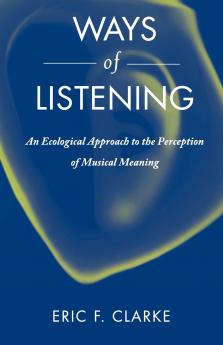
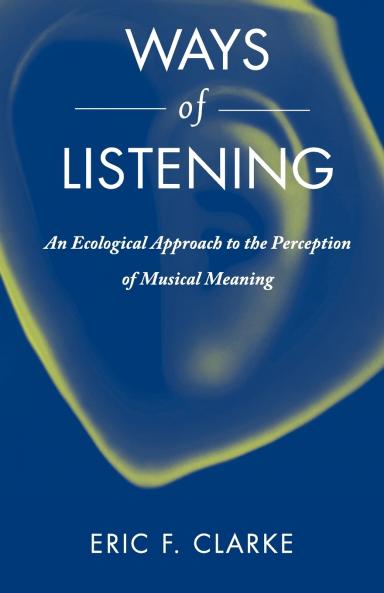
In recent years many psychologists and cognitive scientists have published their views on the psychology of music. Unfortunately this scientific literature has remained inaccessible to musicologists and musicians and has neglected their insights on the subject. In Ways of Listening musicologist Eric Clarke explores musical meaning music''s critical function in human lives and the relationship between listening and musical material. Clarke outlines an ecological approach to understanding the perception of music. The way we hear and understand music is not simply a function of our brain structure or of the musical codes given to us by culture Clarke argues. Instead cognitive psychoacoustical and semiotic issues must be considered within the physical and social contexts of listening. In essence Clarke adapts John Gibson''s influential ecological theory of perception to the complex process of perceiving music. In addition to making a theoretical argument the author offers a number of case studies to illustrate his concept. For example he analyzes the experience of listening to Jimi Hendrix''s performance of the Star Spangled Banner at Woodstock in 1969. Clarke examines how Hendrix''s choice of instrument and venue use of distortion and the political climate in which he performed all had an impact on his audience''s perception of the anthem. A complex convergence of broad cultural contexts and specific musical features - the entire ecology of the listening experience - is responsible for this performance''s impact. Including both the best psychological research and careful musicological scholarship Clarke''s book offers the most complex and insightful perspective on musical meaning to date. It will be of interest to musicologists musicians psychologists and scholars of aesthetics.

Piracy-free

Assured Quality

Secure Transactions

Fast Delivery

Sustainably Printed
Details
ISBN 13
9780199773909
Publication Date
-01-12-2011
Pages
-256
Weight
-306 grams
Dimensions
-140x216x14.73 mm
