

English


₹2227
₹2357
5.52% OFF
(All inclusive*)
Paperback
Delivery Options
Please enter pincode to check delivery time.
*COD & Shipping Charges may apply on certain items.
Review final details at checkout.
Looking to place a bulk order? SUBMIT DETAILS
Delivery Options
Please enter pincode to check delivery time.
*COD & Shipping Charges may apply on certain items.
Review final details at checkout.
About The Book
Description
Author
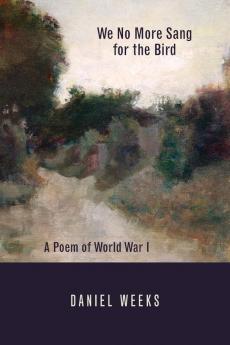
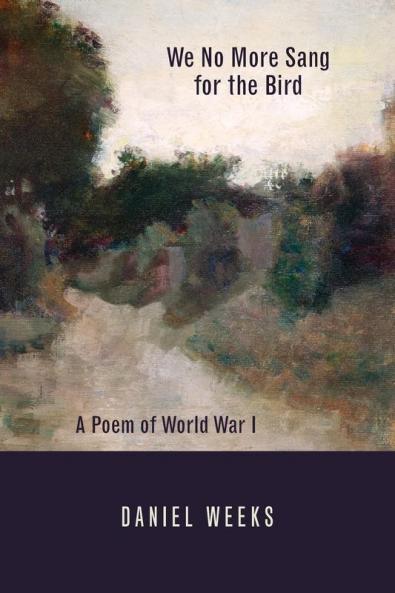
<p>Daniel Weeks's book of poetry W<em>e No More Sang for the Bird </em>named for the final enigmatic phrase poet Edward Thomas inscribed in his journal before his death tells the harrowing story of five British poets of different backgrounds-Rupert Brooke T. E. Hulme Wilfred Owen Thomas and Isaac Rosenberg-all of whom volunteered to serve their country during World War I and died in that service. The long opening poem a lyrically rendered modern epic and its six attendant hymns on the process of reading about these five poets' short lives provide a meditation on the nature of tragedy the brutality of modern war our own place in history's sweep and the redemptive value of poetry.</p><p>&nbsp;</p><p>Homer has risen from the Underworld to write this epic paean to the poets of World War I. But wait! It's Daniel Weeks who has revived Rupert Brooke T. E. Hulme Wilfred Owens Edward Thomas and Isaac Rosenberg. The immediacy imagery and music of <em>We No More Sang for the Bird</em> is so searing we become these soldiers intimately sharing their passions fears and desires. </p><p><span style=color: rgba(255 0 0 1)>This </span>is a 4-D travelogue through time and space. With its vast embrace of history and literature it supersedes dry texts on the war to end all wars. This is a jazz musician's masterpiece syncopating political and personal notes. World War I poets were silenced. In this <em>tour de force</em> Daniel Weeks takes up their song.</p><p>-Susanna Rich author of <em>SHOUT! Poetry for Suffrage</em></p><p>&nbsp;</p><p>Like Siegfried Sassoon reading the younger Wilfred Owen's poems taking / words seriously even in war's wake / noting the music they made Dan Weeks too has read Owen's poems as well as those of Rupert Brooke T. E. Hulme Edward Thomas and Isaac Rosenberg deeply and passionately toward the making of his own poem an epic of WWI focused on those poets caught up in its blood and mothering mud. This ambitious biographical scholarly and wondrously wrought poem views the Great War from their perspectives: We / were the little gods [Brooke] mused / his nose tucked in Webster or Donne / before turning to the soft abrasions / of an English sun. <em>We No More Sang for the Bird </em>is a major accomplishment.</p><p>-Michael Waters author of <em>Caw</em></p><p><span style=color: rgba(0 0 0 1)>&nbsp;</span></p><p><span style=color: rgba(0 0 0 1)>What made some of the most gifted poets and thinkers of the early twentieth century offer themselves to the calamitous war search out art /in grit and rawness choose trenches over sentences blood over ink? Was it love pride duty the need to protect the mother tongue the pull of immortality and the awareness that the war needed its Homer / its Whitman someone to make sense/of senseless things? In </span><em style=color: rgba(0 0 0 1)>We No More Sang for the Bird</em><span style=color: rgba(0 0 0 1)> Dan Weeks awakens us to the impossibility of a single answer and on rhythms of exquisite verve and elegance he gifts us a </span><em style=color: rgba(0 0 0 1)>tour de force</em><span style=color: rgba(0 0 0 1)>. Carefully researched and bold in its empathic reach the collection reads as ode hymn and dazzling historical retelling. </span></p><p>-<span style=color: rgba(0 0 0 1)>Mihaela Moscaliuc author of </span><em style=color: rgba(0 0 0 1)>Cemetery Ink</em></p>

Piracy-free

Assured Quality

Secure Transactions

Fast Delivery

Sustainably Printed
Details
ISBN 13
9781933974545
Publication Date
-06-10-2023
Pages
-178
Weight
-250 grams
Dimensions
-152x229x10.41 mm
