

Eng


₹1477
₹2175
32.09% OFF
(All inclusive*)
Paperback
Delivery Options
Please enter pincode to check delivery time.
*COD & Shipping Charges may apply on certain items.
Review final details at checkout.
Looking to place a bulk order? SUBMIT DETAILS
Delivery Options
Please enter pincode to check delivery time.
*COD & Shipping Charges may apply on certain items.
Review final details at checkout.
About The Book
Description
Author
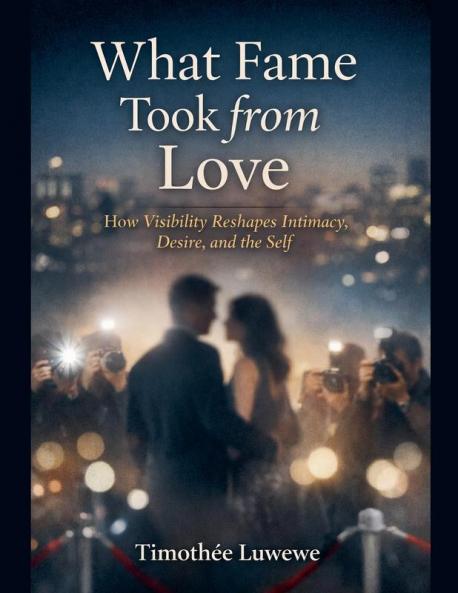
<p><em><strong>What Fame Took from Love</strong></em> is a work of literary nonfiction that examines how visibility-celebrity influence public success-quietly reshapes intimacy. Rather than focusing on scandal or individual failure the book treats fame as a structural condition that alters how love is practiced long before it collapses.</p><p>The book begins by exploring intimacy before exposure: relationships grounded in emotional sovereignty shared interior life and the freedoms of anonymity. It then traces the arrival of a third party-the audience platform industry or narrative-that inserts itself into private bonds. What initially feels like opportunity gradually becomes pressure. Presence gives way to performance. Power enters through asymmetry and dependency.</p><p>As visibility increases desire thins under surveillance. Intimacy becomes cautious and self-conscious. Partners grow lonely not from absence but from proximity without recognition. Love once a refuge begins to feel like liability-something that can expose restrict or destabilize identity.</p><p>Midway through the book intimacy crosses a critical threshold and becomes content. Private conflict is transformed into public narrative. Repair becomes nearly impossible under scrutiny as growth is flattened by record and memory is archived. When relationships finally dissolve they do not end cleanly; they linger publicly leaving individuals to grieve without privacy.</p><p>The final chapters examine aftermath and reckoning: identity after public loss the struggle to reclaim interior life and the question of whether intimacy can exist without witness at all.</p><p>Written in restrained lyrical prose <em>What Fame Took from Love</em> offers cultural critique rather than confession. It provides language for experiences increasingly common in a culture of visibility and asks not who failed-but what the conditions made inevitable.</p>

Piracy-free

Assured Quality

Secure Transactions

Fast Delivery

Sustainably Printed
Details
ISBN 13
9798232504632
Publication Date
-15-01-2026
Pages
-42
Weight
-125 grams
Dimensions
-216x280x2.21 mm
