

English


Paperback
₹3520
₹4582
23.18% OFF
(All inclusive*)
Delivery Options
Please enter pincode to check delivery time.
*COD & Shipping Charges may apply on certain items.
Review final details at checkout.
Looking to place a bulk order? SUBMIT DETAILS
Delivery Options
Please enter pincode to check delivery time.
*COD & Shipping Charges may apply on certain items.
Review final details at checkout.
About The Book
Description
Author
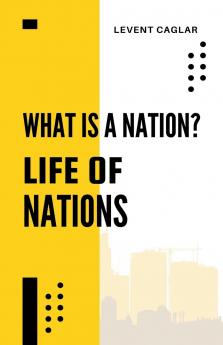
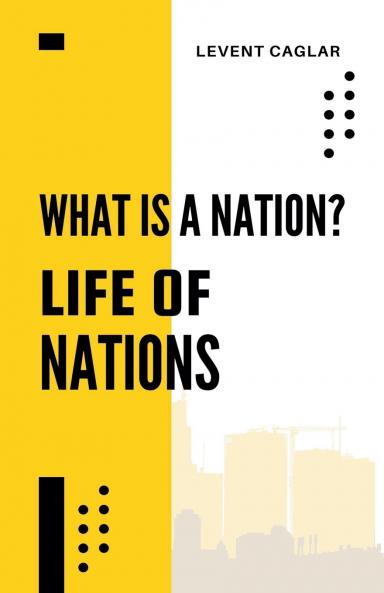
<p><em>What is a Nation?</em> delves into the profound question of what constitutes a nation tracing its evolution through history culture and politics. In this thought-provoking work the author explores how nations like living organisms go through distinct life cycles undergoing birth growth transformation and at times decline. Drawing on revolutionary movements wars and global interactions the book highlights the complex and dynamic nature of national identity which is shaped not merely by political boundaries but by the collective struggles memories and values of the people who comprise it.</p><p>Nations are not static entities-they are born from shared struggles collective memory and the convergence of cultural identities. From the 1776 American Declaration of Independence the rise of European democratic nation-states in 1848 to the seismic shifts caused by the 1917 Russian Revolution these revolutionary moments reshaped global conceptions of sovereignty freedom and self-determination. The book emphasizes that nations are forged not simply by political declarations but through the enduring struggles and aspirations of their people marked by both unity and division prosperity and crisis.</p><p>The author challenges simplistic definitions of nationhood that rely on common language culture or geography. Instead <em>What is a Nation?</em> argues that national identity is a fluid and ever-evolving phenomenon. It is continuously shaped by the historical struggles economic realities and ideological shifts within a nation and by its interactions with the global community. The rise of modernity colonial legacies the quest for independence and the impact of globalization have all played a critical role in reshaping how we define and experience nationhood.</p><p>At the heart of the book is an exploration of intergenerational shifts. Each new generation redefines the concept of nationhood through its unique experiences challenges and values. The tension between tradition and innovation is a recurring theme illustrating how national identities are constantly renegotiated in the face of political economic and cultural change. This dynamic process reveals the profound complexity of nations and the forces that shape their evolution.</p><p>Through its analysis of decolonization the rise of human rights movements and the growing interdependence of nations <em>What is a Nation?</em> also explores the interconnectedness of nations within the global community. In a world where borders are increasingly blurred the idea of a nation as an isolated independent entity has become increasingly obsolete. The book offers a comprehensive look at how the movement of people ideas and goods-along with the ongoing struggles for justice freedom and equality-have transformed the very fabric of nationhood.</p><p>The book argues that nations thrive not by adhering to rigid ideologies or artificial definitions but by adapting to the changing demands of their people and the global context. Whether through economic growth social development or cultural enrichment nations endure by aligning themselves with the universal aspirations for freedom dignity and justice. National identity therefore is not an abstract ideal but a living breathing reality that reflects the historical cultural and existential conditions of its people.</p><p>Ultimately <em>What is a Nation?</em> is a critical examination of what it means to be a nation in the modern world. It goes beyond conventional ideas about sovereignty and governance offering a holistic and nuanced understanding of the complexities of national identity the ever-changing nature of political power and the role that nations play in the global tapestry. In an era of globalization environmental crises and political instability this book provides readers with the intellectual tools needed to understand and navigate the challenges facing nations today.</p>

Piracy-free

Assured Quality

Secure Transactions

Fast Delivery

Sustainably Printed
Details
ISBN 13
9798227488657
Publication Date
-26-02-2025
Pages
-384
Weight
-451 grams
Dimensions
-140x216x21.71 mm
