


This Book is Out of Stock!
English


Paperback
₹2506
₹3400
26.3% OFF
(All inclusive*)
Delivery Options
*COD & Shipping Charges may apply on certain items.
Review final details at checkout.
Looking to place a bulk order? SUBMIT DETAILS

Piracy-free

Assured Quality

Secure Transactions
About The Book
Description
Author
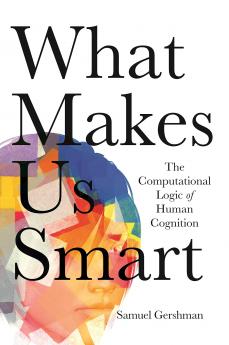
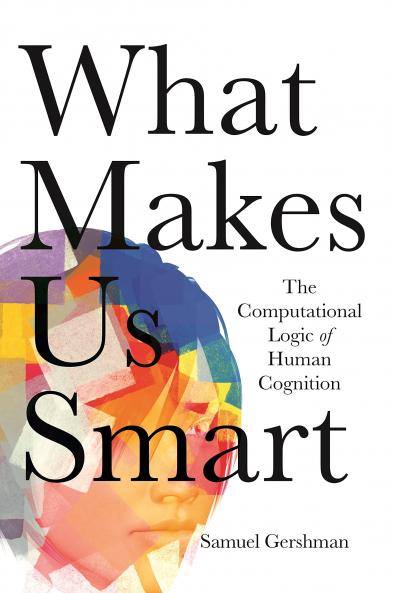
<p><b>How a computational framework can account for the successes and failures of human cognition</b> <p/>At the heart of human intelligence rests a fundamental puzzle: How are we incredibly smart and stupid at the same time? No existing machine can match the power and flexibility of human perception language and reasoning. Yet we routinely commit errors that reveal the failures of our thought processes. <i>What Makes Us Smart</i> makes sense of this paradox by arguing that our cognitive errors are not haphazard. Rather they are the inevitable consequences of a brain optimized for efficient inference and decision making within the constraints of time energy and memory--in other words data and resource limitations. Framing human intelligence in terms of these constraints Samuel Gershman shows how a deeper computational logic underpins the stupid errors of human cognition. <p/>Embarking on a journey across psychology neuroscience computer science linguistics and economics Gershman presents unifying principles that govern human intelligence. First inductive bias: any system that makes inferences based on limited data must constrain its hypotheses in some way before observing data. Second approximation bias: any system that makes inferences and decisions with limited resources must make approximations. Applying these principles to a range of computational errors made by humans Gershman demonstrates that intelligent systems designed to meet these constraints yield characteristically human errors. <p/>Examining how humans make intelligent and maladaptive decisions <i>What Makes Us Smart</i> delves into the successes and failures of cognition.</p>
Piracy-free
Assured Quality
Secure Transactions
*COD & Shipping Charges may apply on certain items.
Review final details at checkout.
₹2506
₹3400
26% OFF
Paperback
Out Of Stock
All inclusive*
Details
ISBN 13
9780691205717
Publication Date
-19-10-2021
Pages
-224
Weight
-386 grams
Dimensions
-156x235x13.7 mm
