


English



₹2880
(All inclusive*)
Paperback
Delivery Options
Please enter pincode to check delivery time.
*COD & Shipping Charges may apply on certain items.
Review final details at checkout.
Looking to place a bulk order? SUBMIT DETAILS
Delivery Options
Please enter pincode to check delivery time.
*COD & Shipping Charges may apply on certain items.
Review final details at checkout.
About The Book
Description
Author(s)
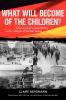
1932: the eve of the Nazi Machtergreifung. The threat of civil war looms over a Germany beset with street violence hunger anti-Semitism and despair. A typical German family the Deutsch family struggles to survive even prosper at this turning point in German history. The story begins with Pitt Deutsch: machinist inventor self-made millionaire whose fortunes turned with Germany's then evaporated in the great inflation. The core of the book follows the fortunes of Deutsch's seven children who encounter poverty and its indignities: Klara the oldest daughter is exhausted by her efforts to provide for the family; Susi the youngest mistress of a businessman is reduced to bringing home extra food for them. The sons are no better off: Peter an unemployed chemist is suicidally depressed; Max falls in love with a Jewish woman experiencing Germany's growing anti-Semitism at first hand. The youngest two brothers unemployed and unable to complete their educations become Nazis expecting their Führer to solve Germany's problems. The family can only hope that Peter and Max can reproduce their father's luck and once again use technology and ingenuity to escape poverty. Claire Bergmann's novel was quickly and positively reviewed by some of Germany's most prominent critics. Hans Fallada admired it as a book about normal events normally written captur[ing] precisely the normal German people of today.... pitch perfect. Bergmann's portrayal of the era's political discussions even as she showed her preference for a democratic solution impressed Siegfried Kracauer one of the era's most incisive critics. Not surprisingly given the work's democratic leanings it was soon banned when the Nazis took over and began to exert control over the world it described. As it faded into obscurity so did its author: Bergmann never wrote another book disappearing from Berlin's telephone directory in 1935 never to re-emerge into the public eye. This first English translation will find an immediate reception among readers interested in the end of Weimar and the rise of the Nazis. It is a message in a bottle from the last moment when German democracy's survival seemed possible. Richard Bodek is Professor of History at the College of Charleston South Carolina. His book Proletarian Performance in Weimar Berlin was published by Camden House in 1997.

Piracy-free

Assured Quality

Secure Transactions

Fast Delivery

Sustainably Printed
Details
ISBN 13
9781571134646
Publication Date
-01-08-2010
Pages
-156
Weight
-221 grams
Dimensions
-152x229x8.49 mm
