


English



Paperback
₹2290
(All inclusive*)
Delivery Options
Please enter pincode to check delivery time.
*COD & Shipping Charges may apply on certain items.
Review final details at checkout.
Looking to place a bulk order? SUBMIT DETAILS
Delivery Options
Please enter pincode to check delivery time.
*COD & Shipping Charges may apply on certain items.
Review final details at checkout.
About The Book
Description
Author
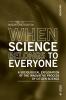
<p class=p1 style=margin-right: 0px; margin-bottom: 0px; margin-left: 0px; text-align: justify; font-variant-numeric: normal; font-variant-east-asian: normal; font-variant-alternates: normal; font-size-adjust: none; font-kerning: auto; font-optical-sizing: auto; font-feature-settings: normal; font-variation-settings: normal; font-variant-position: normal; font-variant-emoji: normal; font-stretch: normal; font-size: 10px; line-height: normal; font-family: NewsGoth BT;><font color=#000000 style=><span style=font-size: 18px;>Science and technology have become inextricably intertwined with people's daily lives profoundly influencing social relations habits lifestyles and work activities and exerting a substantial influence on public opinion. In response to these changes institutions are required to reformulate communication models and knowledge governance strategies. In this scenario Citizen Science emerges as a participatory tool that actively involves citizens in scientific production thereby redefining the concept of openness in science and promoting more inclusive forms of knowledge construction. The present study proposes a sociological reflection on these dynamics investigating the Italian case through a mixed methodological approach. The analysis focuses on the potential of Citizen Science to contribute to the definition of public policies highlighting the social and political implications of this participatory change.</span><span class=Apple-converted-space style=font-size: 18px;> </span></font></p>

Piracy-free

Assured Quality

Secure Transactions

Fast Delivery

Sustainably Printed
Details
ISBN 13
9788869775024
Publication Date
-24-10-2025
Pages
-178
Weight
-212 grams
Dimensions
-140x210x10.41 mm
