

English


Hardback
₹7337
₹9408
22.01% OFF
(All inclusive*)
Delivery Options
Please enter pincode to check delivery time.
*COD & Shipping Charges may apply on certain items.
Review final details at checkout.
Looking to place a bulk order? SUBMIT DETAILS
Delivery Options
Please enter pincode to check delivery time.
*COD & Shipping Charges may apply on certain items.
Review final details at checkout.
About The Book
Description
Author
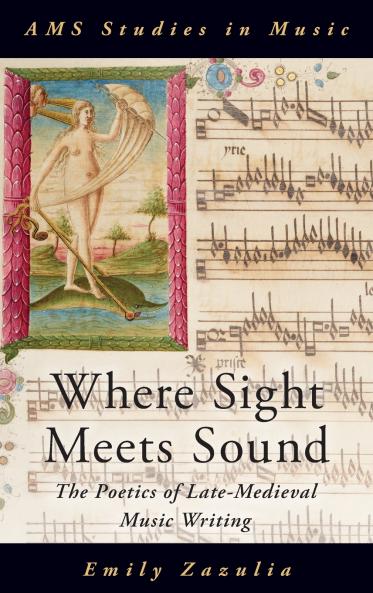
The main function of western musical notation is incidental: it prescribes and records sound. But during the fourteenth and fifteenth centuries notation began to take on an aesthetic life all its own. In the early fifteenth century a musician might be asked to sing a line slower faster or starting on a different pitch than what is written. By the end of the century composers had begun tasking singers with solving elaborate puzzles to produce sounds whose relationship to the written notes is anything but obvious. These instructions which appear by turns unnecessary and confounding challenge traditional conceptions of music writing that understand notation as an incidental consequence of the desire to record sound. This book explores innovations in late-medieval music writing as well as how modern scholarship on notation has informed--sometimes erroneously--ideas about the premodern era. Drawing on both musical and music-theoretical evidence this book reframes our<br>understanding of late-medieval musical notation as a system that was innovative cutting-edge and dynamic--one that could be used to generate music not just preserve it.<br>

Piracy-free

Assured Quality

Secure Transactions

Fast Delivery

Sustainably Printed
Details
ISBN 13
9780197551912
Publication Date
-01-11-2021
Pages
-340
Weight
-576 grams
Dimensions
-156x234x20.64 mm
