

English


Paperback
₹2516
₹2912
13.6% OFF
(All inclusive*)
Delivery Options
Please enter pincode to check delivery time.
*COD & Shipping Charges may apply on certain items.
Review final details at checkout.
Looking to place a bulk order? SUBMIT DETAILS
Delivery Options
Please enter pincode to check delivery time.
*COD & Shipping Charges may apply on certain items.
Review final details at checkout.
About The Book
Description
Author
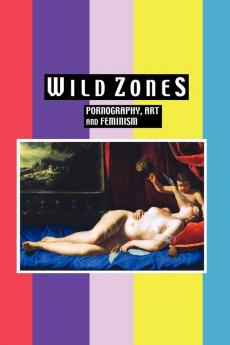
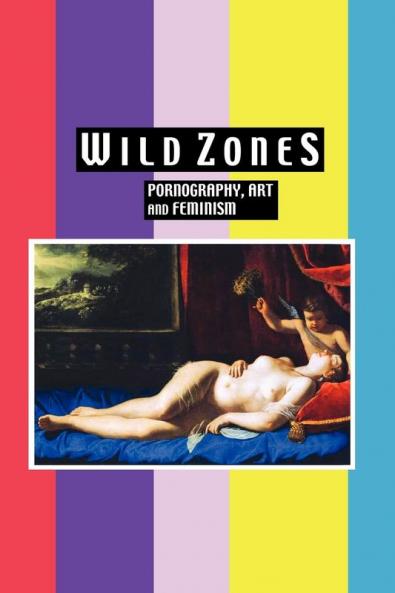
<p><strong>WILD ZONES</strong></p><p></p><p>Kelly Ives explores the worlds sexual representation in art and pornography from a feminist viewpoint.</p><p>The book includes chapters on the depiction of sexuality in art from contemporary art and pornography back through the Renaissance to prehistory; on the problematic relations between showing sexuality and censorship; the history of porn; and women's art and how women artists have depicted sexual acts and identities.</p><p>Fully illustrated with images from the history of representing sexuality from prehistory to the present day.</p><p>Includes notes and bibliography.</p><p>KELLY IVES has written widely on feminism philosophy and art. Her previous books include Cixous Irigaray Kristeva: The Jouissance of French Feminism Julia Kristeva and Hélène Cixous.</p><p>EXTRACT FROM THE INTRODUCTION</p><p>Firstly there are as many definitions of art and pornography as there are people. Everyone has their own opinions their own interests and realms to defend. There are the liberals who say that nothing should be censored including pornography. Pornography is seen as part of artistic expression and if people want to express themselves they should and if they want pornography they should have it. This is the view of liberals such as Peter Webb who campaigns for freedom of expression and an art that should 'celebrate' eroticism. This is a familiar viewpoint which we have heard made many times. In the (male) liberal view sex is OK so sexual art must be OK so that much of pornography must be OK. The 'experts' on sex the so-called 'sexologists' (Eduard Fuchs Richard von Krafft-Ebbing Sigmund Freud Wilhelm Reich) argue that sex is a normal part of life so it is natural that it should abound in art. Fuchs wrote; '[a]rt has treated erotic themes at almost all periods... [it] lies at the root of all human life.'</p><p>•</p><p>Everyone seems to have their cut-off points however their 'standards' of 'taste' and 'decency'. It's a very subjective business the debates between art and pornography and between pornography and censorship. As Wendy Moore writes: '[c]ensorship like freedom is an entirely subjective term'. What you like defines yourself. As Pierre Bourdieu put it: '[t]aste classifies and it classifies the classifier.'</p><p>Taste choice categorization and classification then defines the viewer the reader the consumer. Censorship you might say defines the culture. And 'sensitive' novelists are wary of writing 'sex scenes' because they know that what they write defines themselves. Yet sex is crucial to art many artists say. As Gertrude Stein wrote: '[l]iterature - creative literature - unconnected with sex is inconceivable.'</p>

Piracy-free

Assured Quality

Secure Transactions
Details
ISBN 13
9781861712929
Publication Date
-01-10-2010
Pages
-268
Weight
-385 grams
Dimensions
-156x234x14.3 mm
