


English



₹18221
₹21752
16.23% OFF
(All inclusive*)
Hardback
Delivery Options
Please enter pincode to check delivery time.
*COD & Shipping Charges may apply on certain items.
Review final details at checkout.
Looking to place a bulk order? SUBMIT DETAILS
Delivery Options
Please enter pincode to check delivery time.
*COD & Shipping Charges may apply on certain items.
Review final details at checkout.
About The Book
Description
Author
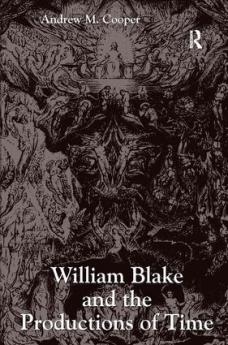
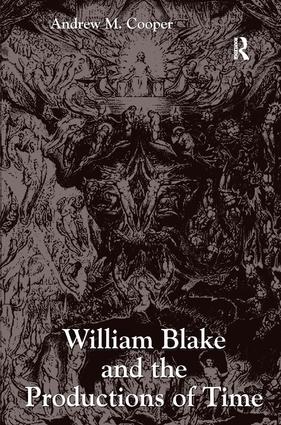
Challenging the idea that a writer’s work reflects his experiences in time and place Andrew M. Cooper locates the action of William Blake’s major illuminated books in the ahistorical present an impersonal spirit realm beyond the three-dimensional self. Blake Cooper shows was a formalist who exploited eighteenth-century scientific and philosophical research on vision sense and mind for spiritual purposes. Through irony dialogism two-way syntax and synesthesia Blake extended and refined the prophetic method Milton forged in Paradise Lost to bring the performativity of traditional oral song and storytelling into print. Cooper argues that historicist attempts to place Blake’s vision in perspective as opposed to seeing it for oneself involve a deeply self-contradictory denial of his performativity as a poet-artist. Rather Blake’s expansion of linear reading into a space of creative self-conscious collaboration laid the basis for his lifelong critique of dualism in religion and science and anticipated the non-Euclidean geometrics of twentieth-century Modernism.

Piracy-free

Assured Quality

Secure Transactions

Fast Delivery

Sustainably Printed
Details
ISBN 13
9781409444411
Publication Date
-28-07-2013
Pages
-362
Weight
-606 grams
Dimensions
-156x234x20.6 mm
