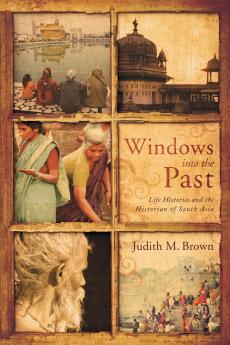
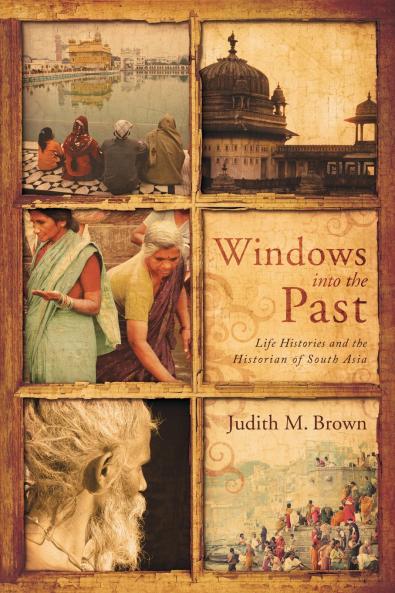
<p>Judith M. Brown one of the leading historians of South Asia provides an original and thought-provoking strategy for conducting and presenting historical research in her latest book <i>Windows into the Past</i>. Brown looks at how varieties of life history that focus on the lives of institutions and families as well as individuals offer a broad and rich means of studying history. Her distinctively creative approach differs from traditional historical biography in that it explores a variety of life histories and shows us how they become invaluable windows into the past. Following her introduction The Practice of History Brown opens windows on the history of South Asia. She begins with the life history of an educational institution Balliol College Oxford and tracks the interrelationship between Britain and India through the lives of the British and Indian men who were educated there. She then demonstrates the significance of family life history showing that by observing patterns of family life over several generations it is possible to gain insight into the experiences of groups of people who rarely left historical documents about themselves particularly South Asian women. Finally Brown uses the life history of two prominent individuals Mahatma Gandhi and Jawaharlal Nehru to examine questions about the nature of Indian nationalism and the emergent Indian state.</p> <p>This book provides an example of the historian's craft at its best. Known throughout the world for her balanced and influential interpretation of modern India Mahatma Gandhi and Nehru Judith Brown has excelled herself by opening windows into India's recent past that hitherto have remained closed. The elegance of style adds to the power of the argument. Read it: you will enjoy the experience. --Anthony Parel University of Calgary</p> <p>Once again Judith Brown has amazed us with something truly remarkable. Her latest book so exquisitely well crafted is a gem. It gives us fresh glimpses into facets of India's (or South Asia's) recent past of things never before seen or imagined. Reflecting brilliance of imagination and insight it shows us new ways of 'doing history.' By focusing upon dynastic 'lives' of specific institutions--cohorts and families of Balliol College as well as individuals in their 'public' and 'private' worlds--this work turns our understandings around. Never again will we look at the Raj or at Gandhi and Nehru in quite the same way. --Robert Eric Frykenberg University of Wisconsin-Madison</p> <p>Utilizing Balliol College records personal photographs life histories and more traditional sources such as autobiographies and private papers Judith Brown incisively explores multiple themes in the history of colonial and independent India. They range from the graduates of Balliol College who formed 'dynasties' within an imperial administration to how the iconic Indian leaders Gandhi and Nehru confronted public and private challenges while creating an Indian nation. Her fascinating narrative of family histories will stimulate both professional historians and popular audiences to reconsider how such histories can illuminate broader topics such as imperial dominance nation-building and globalization. --Barbara Ramusack Charles Phelps Taft Professor University of Cincinnati</p> <p>Judith Brown provides an insightful demonstration of the diverse uses historians can make of biography as a means of interrogating the past and of communicating with a wider public outside academia. In taking 'life history' beyond the study of individuals to explore family group and institutional trajectories over several generations Brown's innovative analyses extend from the lives of powerful and well-documented figures central to the evolution of modern India particularly Gandhi and Nehru to British family 'dynasties' and educational institutions that decisively shaped the Raj to the lives of ordinary Ind
Piracy-free
Assured Quality
Secure Transactions
Delivery Options
Please enter pincode to check delivery time.
*COD & Shipping Charges may apply on certain items.