


English



Hardback
₹11633
₹14917
22.02% OFF
(All inclusive*)
Delivery Options
Please enter pincode to check delivery time.
*COD & Shipping Charges may apply on certain items.
Review final details at checkout.
Looking to place a bulk order? SUBMIT DETAILS
Delivery Options
Please enter pincode to check delivery time.
*COD & Shipping Charges may apply on certain items.
Review final details at checkout.
About The Book
Description
Author
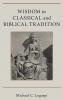
<em>Wisdom in Classical and Biblical Tradition</em> begins with the recognition that modern culture emerged from a synthesis of the legacies of ancient Greek civilization and the theological perspectives of the Jewish and Christian scriptures. Part of what made this synthesis possible was a shared outlook: a common aspiration toward wholeness of understanding that refused to separate knowledge from goodness virtue from happiness <em>cosmos</em> from <em>polis</em> and divine authority from human responsibility. This wholeness of understanding or wisdom featured prominently in both classical and biblical literatures as an ultimate good. <p/>Michael Legaspi has two central aims. The first is to explain in formal terms what wisdom is. Though wisdom involves matters of practical judgment affecting the life of the individual and the community it has also been identified with an understanding of the world and of the ultimate realities that give meaning to human thought and action. In its traditional form wisdom was understood to govern intellectual social and ethical endeavors. His second aim is to analyze figures and texts that have yielded and shaped the traditional understanding of wisdom. The book examines accounts of wisdom within foundational texts that range from the period of Homer to the destruction of the Second Temple. In doing so it explains why the search for wisdom remains an important but problematic endeavor today.<br>

Piracy-free

Assured Quality

Secure Transactions

Fast Delivery

Sustainably Printed
Details
ISBN 13
9780190885120
Publication Date
-03-09-2018
Pages
-330
Weight
-562 grams
Dimensions
-156x234x19.05 mm
