

English


Paperback
₹8377
₹10705
21.75% OFF
(All inclusive*)
Delivery Options
Please enter pincode to check delivery time.
*COD & Shipping Charges may apply on certain items.
Review final details at checkout.
Looking to place a bulk order? SUBMIT DETAILS
Delivery Options
Please enter pincode to check delivery time.
*COD & Shipping Charges may apply on certain items.
Review final details at checkout.
About The Book
Description
Author
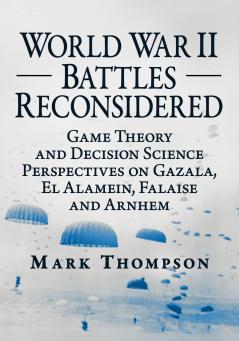
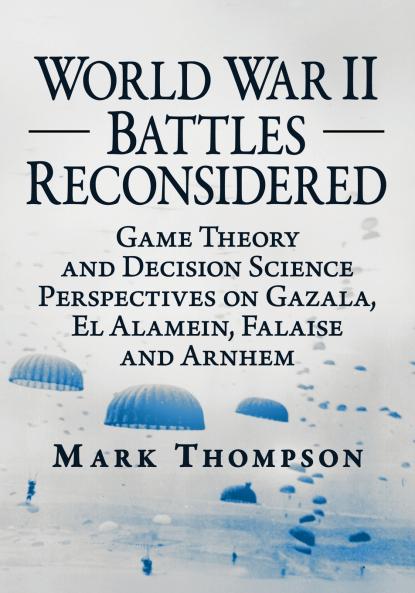
<p> Written by a former Harvard professor of decision science and game theory this book presents original insights on the strategies and tactics undertaken in four major battles of the Second World War. That the fighting at Gazala in Libya in the late spring of 1942 constituted what has been called probably the most spectacular series of victories ever gained over a British army was in part due to its having violated the game-theoretic Zero-Sum Maxim of Napoleon: Do not do what your enemy wishes you to. The sensational British reversal of that disaster later that year at El Alamein in Egypt derived largely from heeding the millennia-old military priority of command unity which has been analyzed and re-endorsed by modern decision science. This discipline has also judged the somewhat disappointing victory of the Allies at Falaise in France in August of 1944 to have resulted from excessive risk aversion--possibly induced by three different types of fatigue. One month later the Allied setback at Arnhem in the Netherlands called into question from the perspective of game theory the value of battlefield surprise. These decisions approached from an expert perspective on game theory and presented with high-quality maps are presented in this pioneering application of decision science to the battles of World War II.</p>

Piracy-free

Assured Quality

Secure Transactions

Fast Delivery

Sustainably Printed
Details
ISBN 13
9781476696737
Publication Date
-03-04-2025
Pages
-280
Weight
-498 grams
Dimensions
-178x254x14.93 mm
