





₹4626
₹4870
5.01% OFF
(All inclusive*)
Paperback
Delivery Options
Please enter pincode to check delivery time.
*COD & Shipping Charges may apply on certain items.
Review final details at checkout.
Looking to place a bulk order? SUBMIT DETAILS
Delivery Options
Please enter pincode to check delivery time.
*COD & Shipping Charges may apply on certain items.
Review final details at checkout.
About The Book
Description
Author
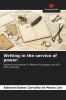
This work seeks to understand the role and representativeness of the clerks for colonial society from the mapping of all the clerks'' and notaries'' offices that existed in the kingdom and later throughout the Empire. To this end three sets of Lusitanian laws were used produced between the 15th and 17th centuries which defined the jurisdictions and competences of these offices such as the Afonsinas Ordinances (1446/7-1511) the Manueline Ordinances (1512-1603) and finally the Philippine Ordinances (1603-1917). These legislative corpus were conceived in the light of the jurisdictionalist paradigm of the Ancien Regime and therefore in accordance with the coeval social symbolic order. From this analysis we have the history of the clerks and notaries throughout the Empire in different political and economic contexts. Finally it is reiterated in this book the importance of the clerks and notaries as depositaries of institutional memory as well as the permanence character of these officials in the Lusitanian administration of the Modern Era a situation characteristically different from the other Lusitanian royal agents.

Piracy-free

Assured Quality

Secure Transactions

Fast Delivery

Sustainably Printed
Details
ISBN 13
9786203661156
Publication Date
-26-04-2021
Pages
-84
Weight
-127 grams
Dimensions
-150x220x4.92 mm
