


English



Paperback
₹5305
₹6802
22.01% OFF
(All inclusive*)
Delivery Options
Please enter pincode to check delivery time.
*COD & Shipping Charges may apply on certain items.
Review final details at checkout.
Looking to place a bulk order? SUBMIT DETAILS

Piracy-free

Assured Quality

Secure Transactions
About The Book
Description
Author
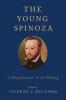
<p><em>Ex nihilo nihil fit</em>. Philosophy especially great philosophy does not appear out of the blue. In the current volume a team of top scholars-both up-and-coming and established-attempts to trace the philosophical development of one of the greatest philosophers of all time. Featuring twenty new essays and an introduction it is the first attempt of its kind in English and its appearance coincides with the recent surge of interest in Spinoza in Anglo-American philosophy.</p><p>Spinoza&#39;s fame-or notoriety-is due primarily to his posthumously published magnum opus the<em> Ethics</em> and to a lesser extent to the 1670 <em>Theological-Political Treatise</em>. Few readers take the time to study his early works carefully. If they do they are likely to encounter some surprising claims which often diverge from or even utterly contradict the doctrines of the <em>Ethics</em>. Consider just a few of these assertions: that God acts from absolute freedom of will that God is a whole that there are no modes in God that extension is divisible and hence cannot be an attribute of God and that the intellectual and corporeal substances are modes in relation to God. Yet though these claims reveal some tension between the early works and the <em>Ethics</em> there is also a clear continuity between them.</p><p>Spinoza wrote the <em>Ethics</em> over a long period of time which spanned most of his philosophical career. The dates of the early drafts of the <em>Ethics</em> seem to overlap with the assumed dates of the composition of the <em>Treatise on the Emendation of the Intellect </em>and the <em>Short Treatise on God Man and His</em> <em>Well Being</em> and precede the publication of Spinoza&#39;s 1663 book on Descartes&#39; <em>Principles of Philosophy</em>. For this reason a study of Spinoza&#39;s early works (and correspondence) can illuminate the nature of the problems Spinoza addresses in the <em>Ethics</em> insofar as the views expressed in the early works help us reconstruct the development and genealogy of the <em>Ethics</em>. Indeed if we keep in mind the common dictum &quot;nothing comes from nothing&quot;-which Spinoza frequently cites and appeals to-it is clear that great works like the <em>Ethics</em> do not appear ex nihilo. In light of the preeminence and majesty of the <em>Ethics</em> it is difficult to study the early works without having the <em>Ethics</em> in sight. Still we would venture to say that the value of Spinoza&#39;s early works is not at all limited to their being stations on the road leading to the <em>Ethics</em>. A teleological attitude of such a sort would celebrate the works of the &quot;mature Spinoza&quot; at the expense of the early works. However we have no reason to assume that on all issues the views of the <em>Ethics</em> are better argued developed and motivated than those of the early works. In other words we should keep our minds open to the possibility that on some issues the early works might contain better analysis and argumentation than the <em>Ethics</em>.</p>
Piracy-free
Assured Quality
Secure Transactions
Delivery Options
Please enter pincode to check delivery time.
*COD & Shipping Charges may apply on certain items.
Review final details at checkout.
Details
ISBN 13
9780199971664
Publication Date
-01-04-2015
Pages
-378
Weight
-536 grams
Dimensions
-156x234x21.38 mm
